
Last updated September 10, 2026
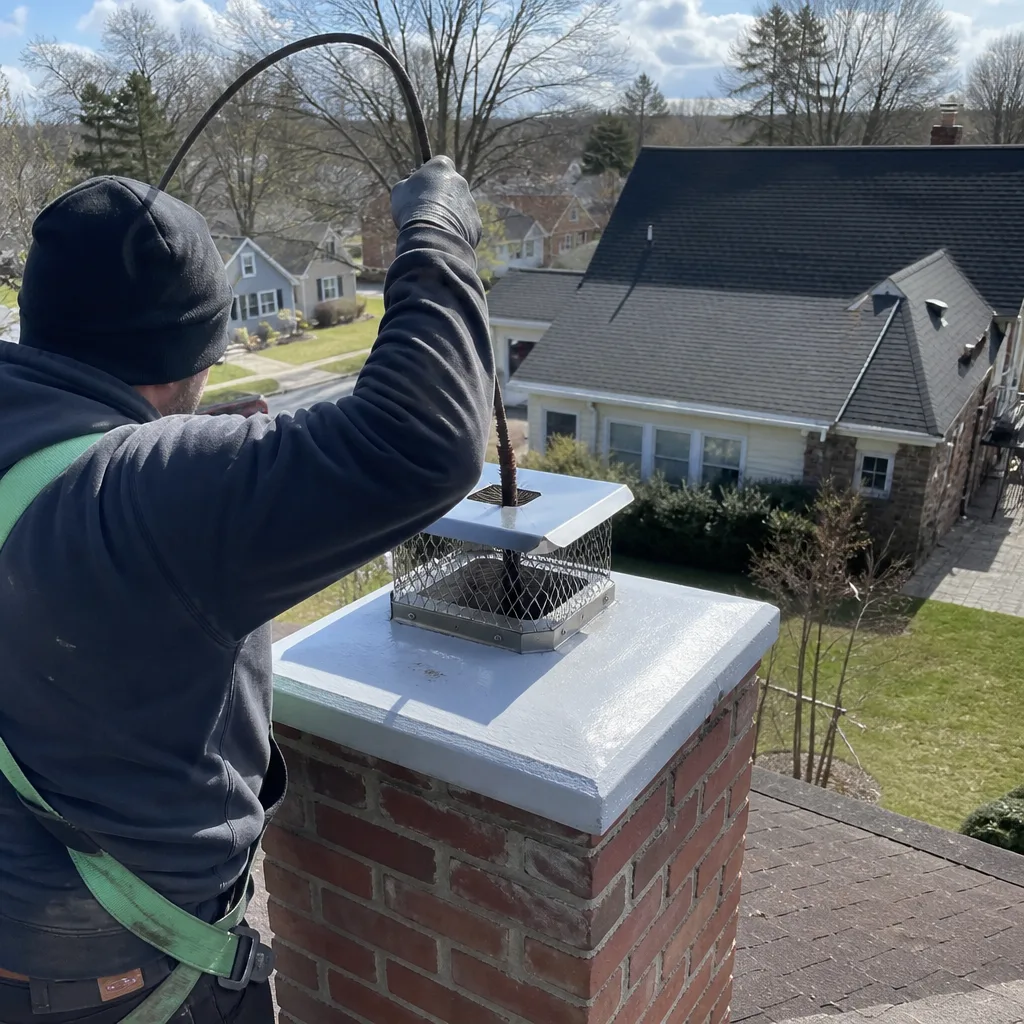
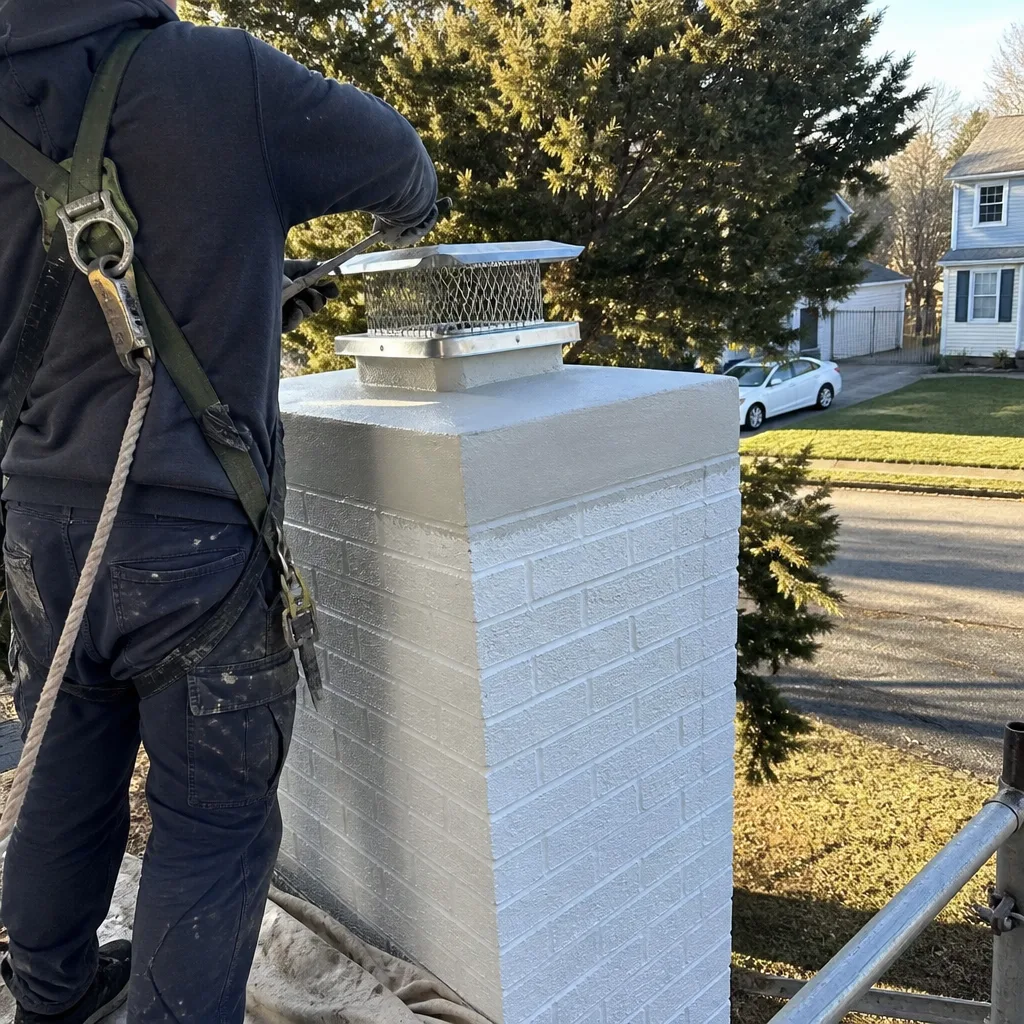
Level 1 sweep and inspection to the NFPA 211 annual standard - flue, crown, cap, and flashing checked and photographed
Chimney sweep logs do not sweep chimneys. They loosen some creosote - which then falls where a brush and vacuum still have to collect it.
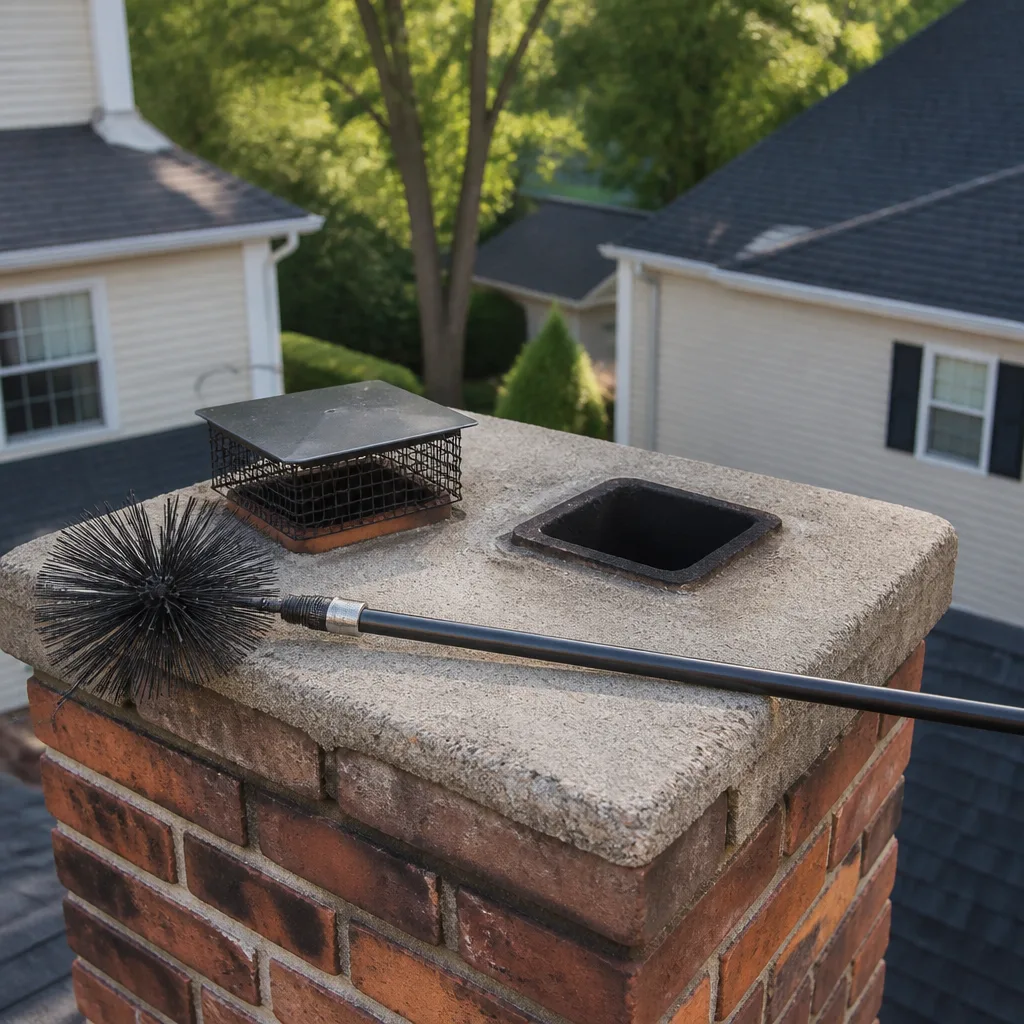
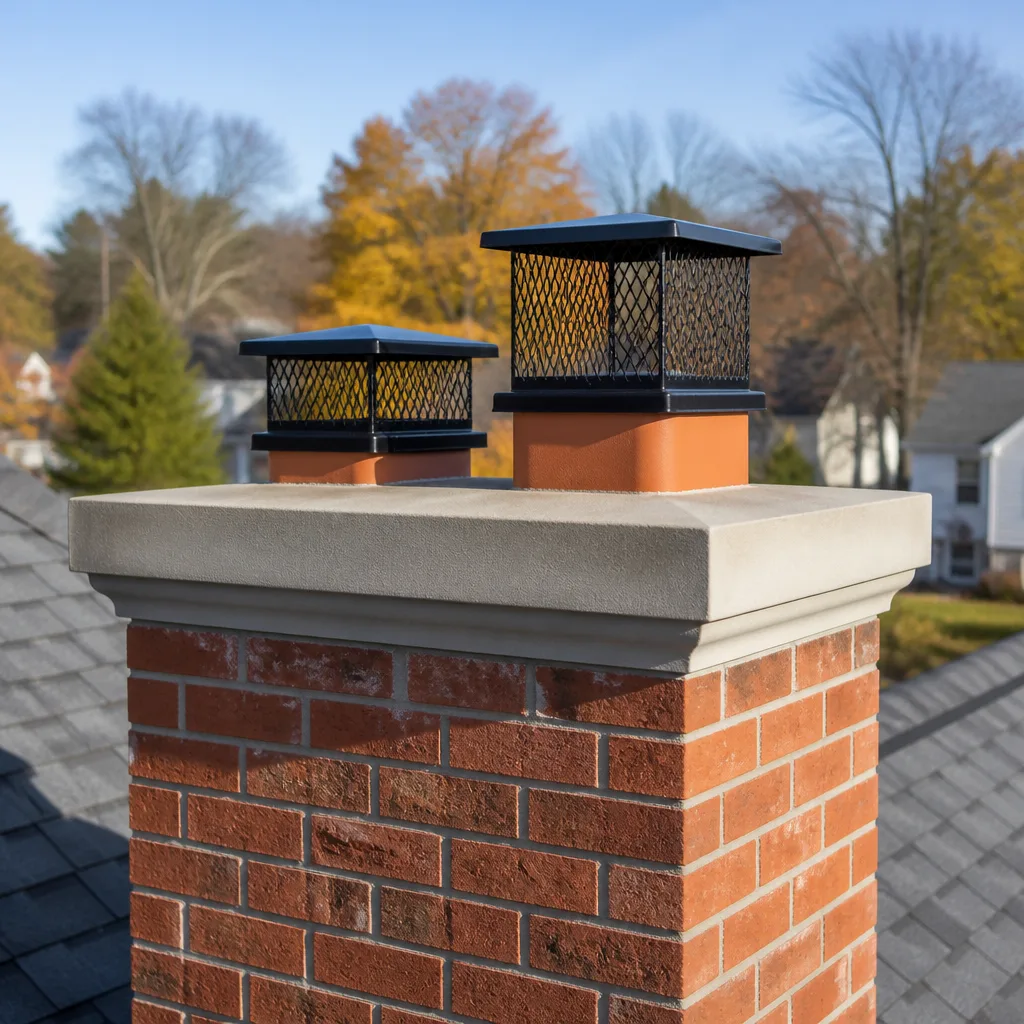
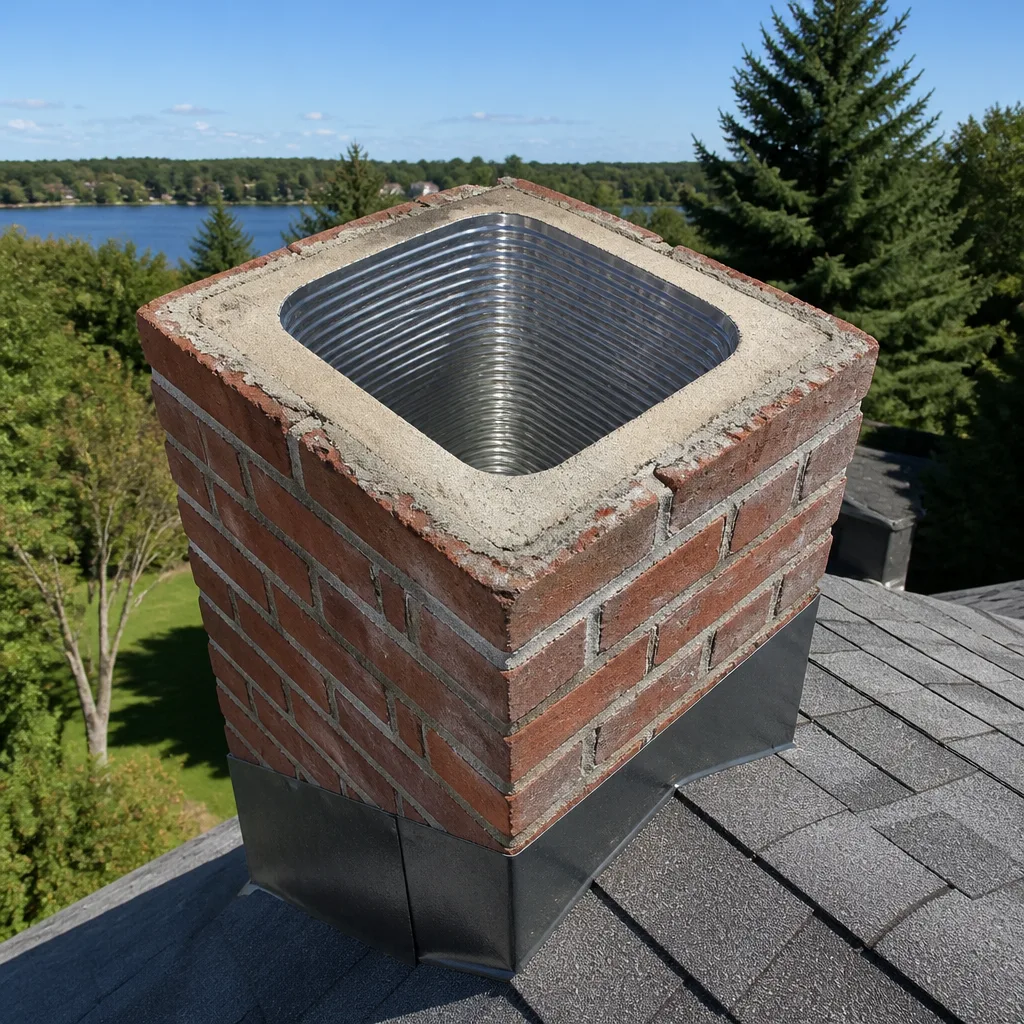
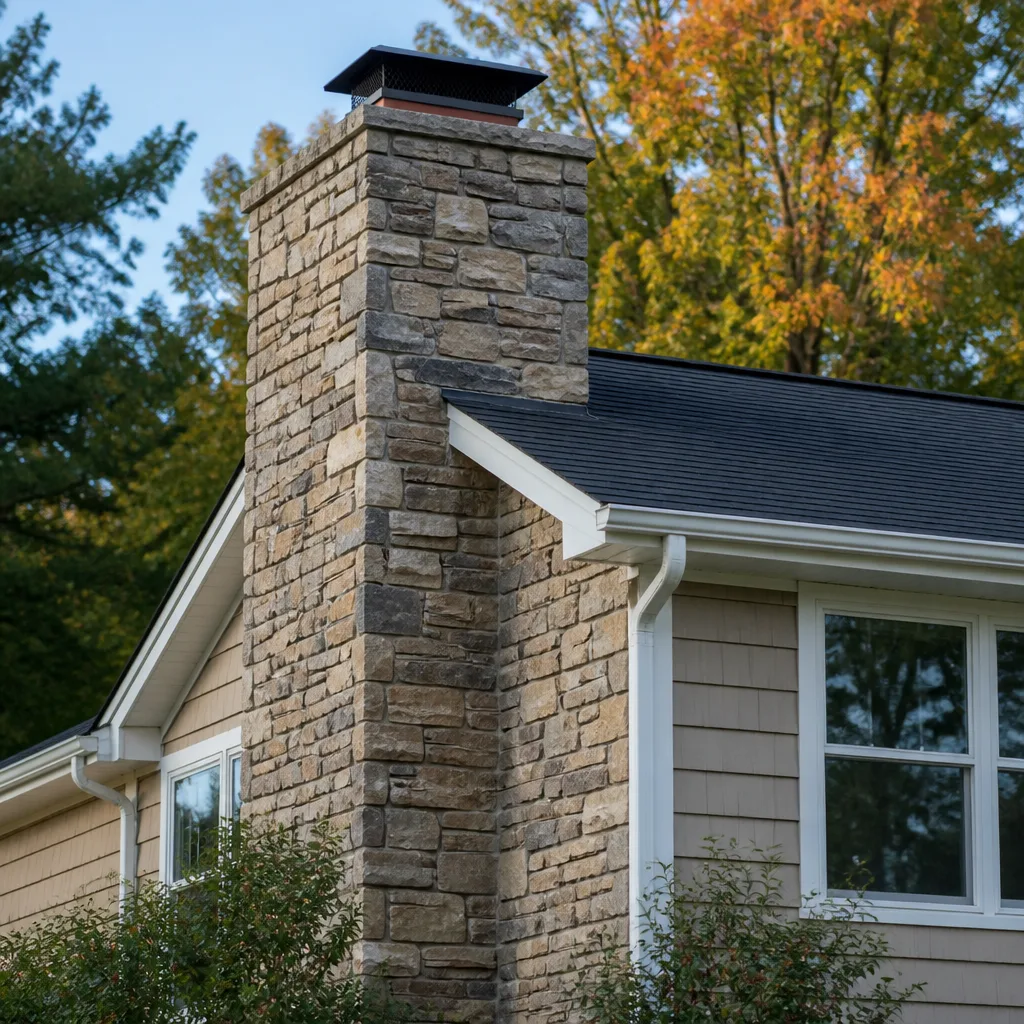
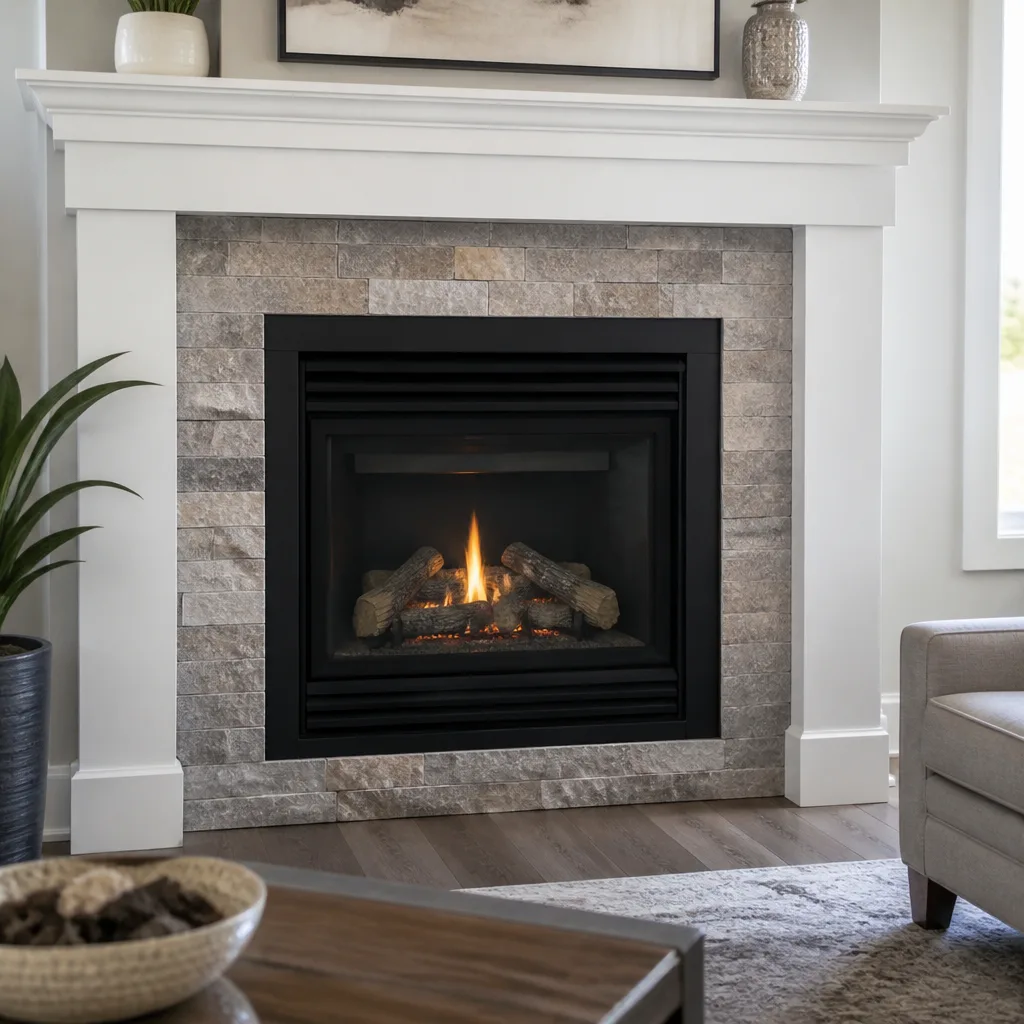
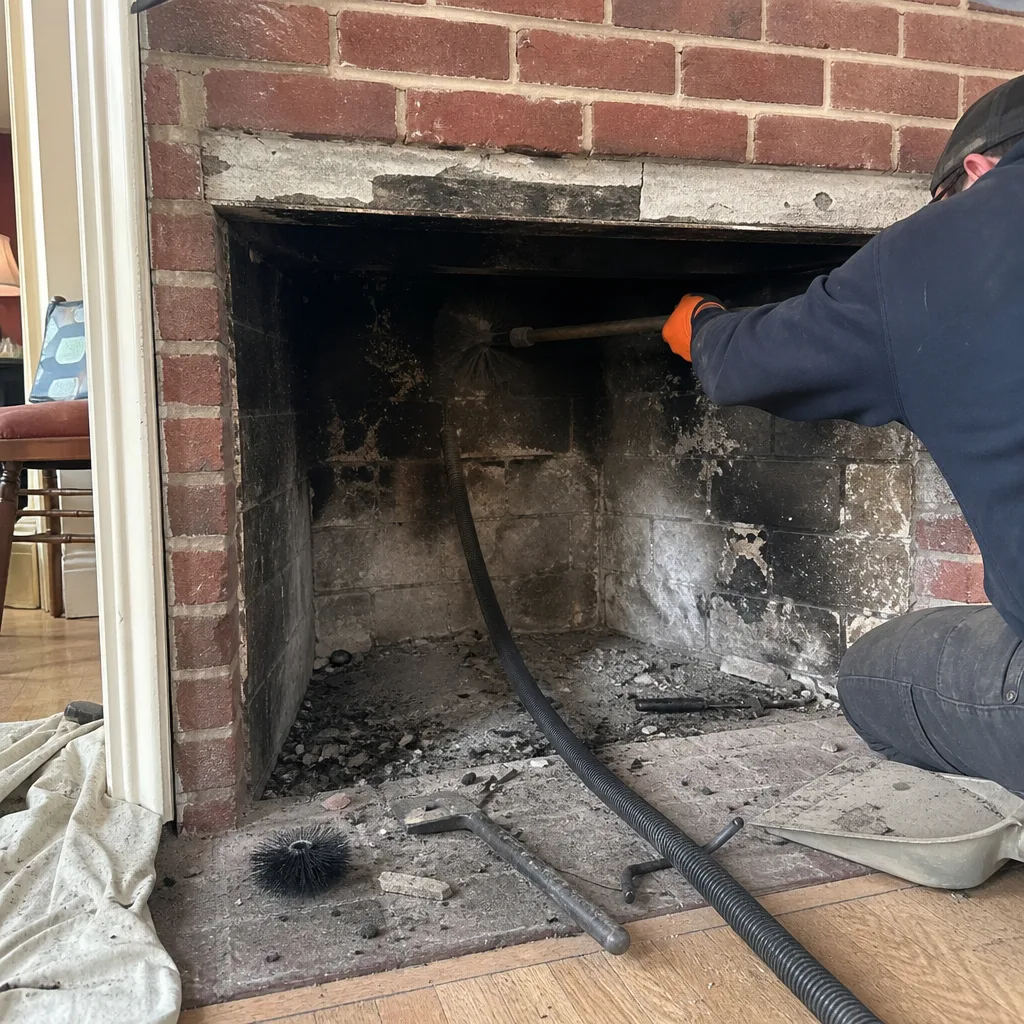 Before
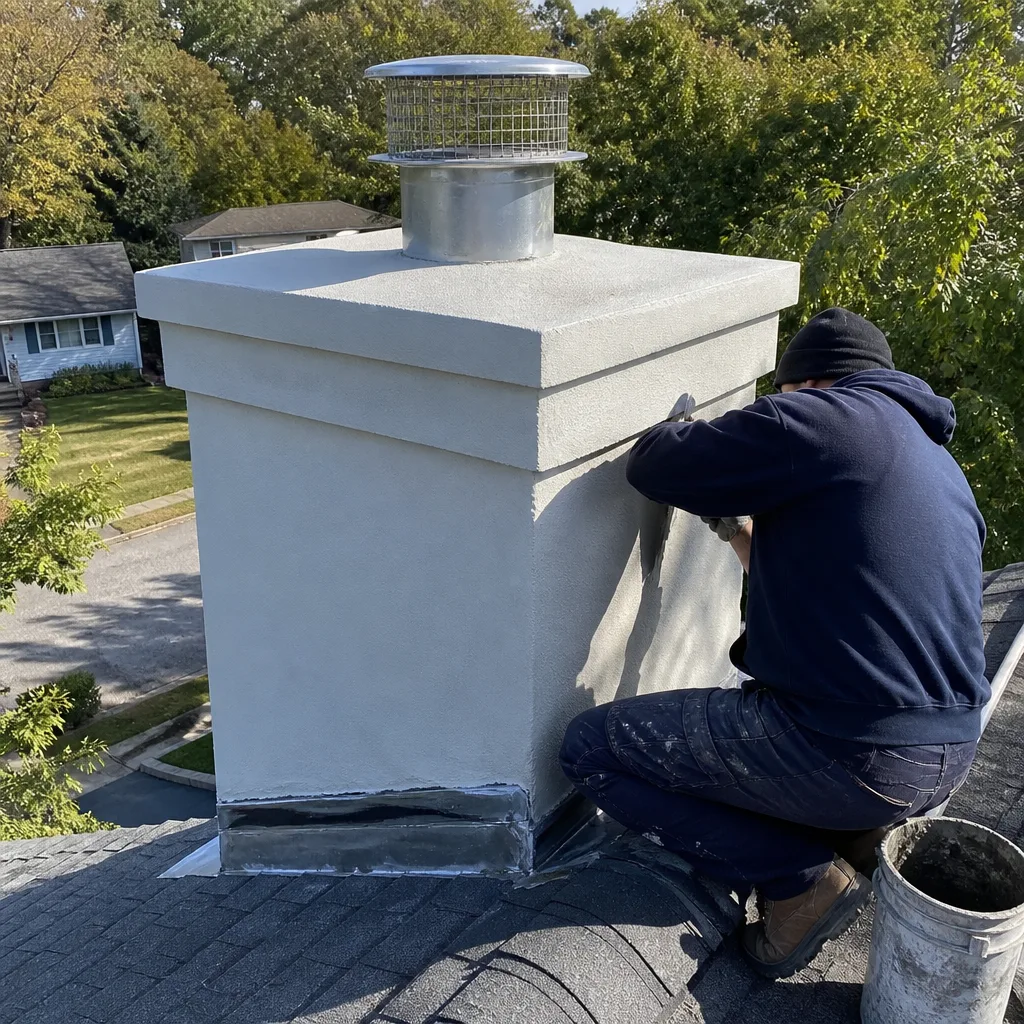 After
After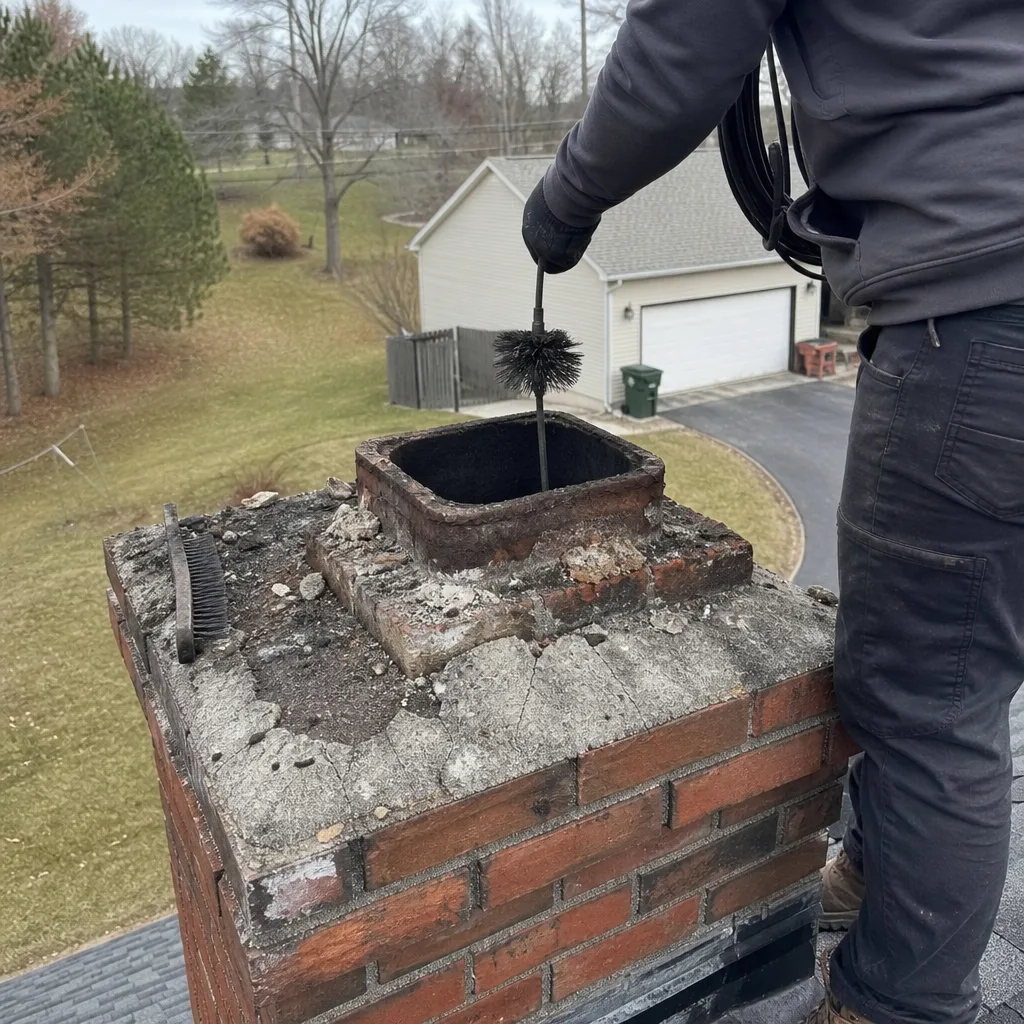 Before
 After
After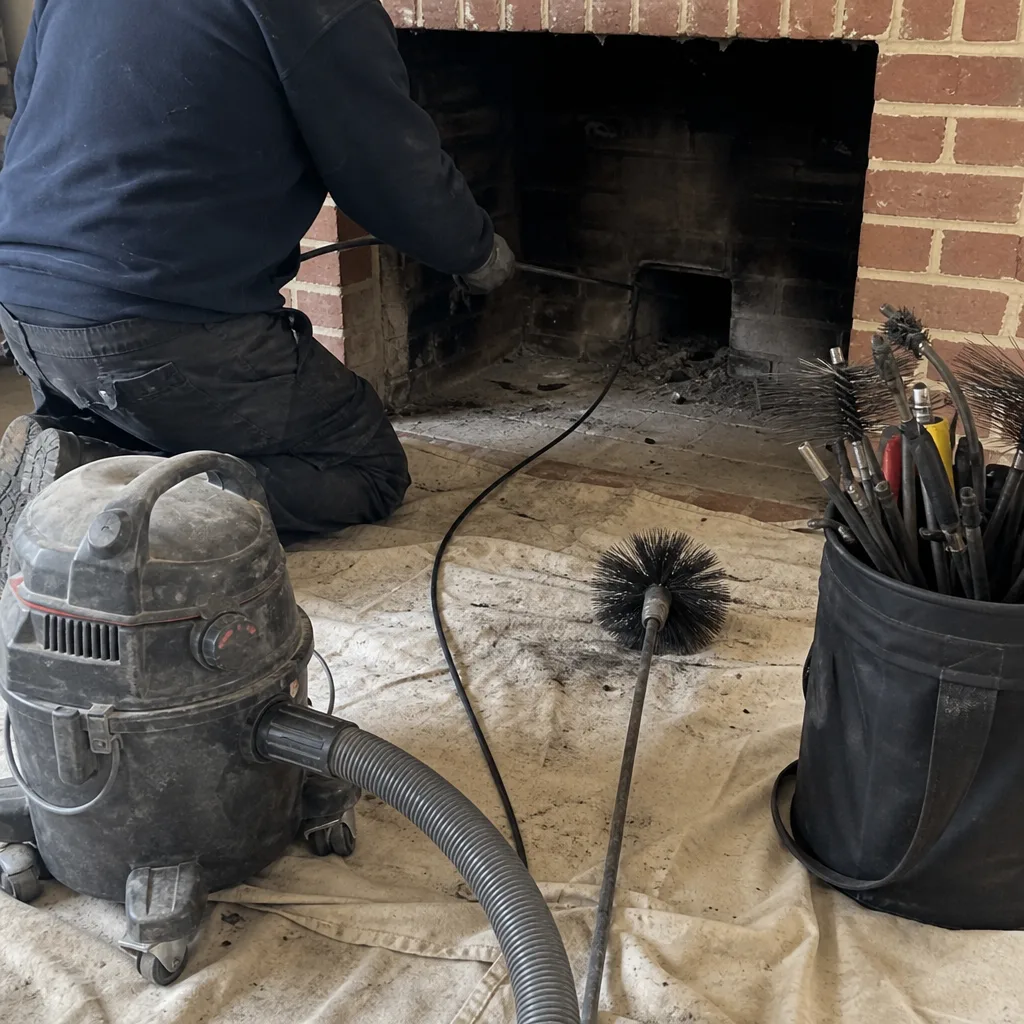 Before
 After
AfterChimney Cleaning Permits, Codes & Inspections in NY: What You Need to Know
Homeowners who sell a house in Nassau County with unpermitted chimney repair work - even work done by a licensed contractor who didn’t pull the permit - can face delayed closings, escrow holdbacks, or forced remediation at their own expense. In Seaford, we’ve seen this scenario more than once: a couple ready to downsize discovers that the liner replacement from 2019 never had a permit filed, and now the buyer’s attorney wants it ripped out and redone by a permit-holding company before closing. This guide draws the line between routine chimney maintenance and permitted work so you know exactly when to ask for paperwork before the first tool touches your flue.
Quick Answer
Routine chimney cleaning and sweeping in New York does not require a building permit. However, any repair, alteration, or component replacement - including liner installation, firebox rebuilds, crown replacement, or structural modifications - triggers permit requirements under the New York State Fire Prevention and Building Code and local Nassau County amendments. Homeowners should verify permit numbers before work begins and keep all documentation for future real estate transactions.
Table of Contents
- Maintenance vs. Permitted Work: The Line Every Homeowner Misses
- Nassau County’s Local Code Overlay and What It Means for Seaford Homes
- What NFPA 211 Compliance Means for Your Insurance and Safety
- How to Verify a Contractor Pulled a Permit (And Why Verbal Assurances Fail)
- Documentation to Keep After Permitted Chimney Work
- The Level-2 Inspection Process: What Happens and What You’ll Receive
- Permit Costs, Inspection Timelines, and Who Pays
- Common Mistakes to Avoid
- When to Call a Professional
- Frequently Asked Questions
- The Bottom Line
Maintenance vs. Permitted Work: The Line Every Homeowner Misses
The distinction seems simple until you’re standing in your driveway with a contractor who needs an answer. Here’s where New York draws the line.
Maintenance work - no permit required:
- Chimney sweeping and creosote removal
- Visual inspection without structural assessment
- Cap cleaning and minor debris removal
- Fireplace face cleaning and damper lubrication
Repair or alteration work - permit required:
- Liner repair or replacement (stainless steel, aluminum, or cast-in-place)
- Firebox refractory panel replacement or rebuild
- Crown reconstruction or replacement
- Smoke chamber parging
- Chase cover or chase rebuild
- Structural modifications to the chimney breast or foundation
- Installation of new appliances (inserts, stoves) connected to existing flues
In our 42 years of work across Nassau County, the most common point of confusion is liner replacement. A homeowner in Seaford’s Harbor Green neighborhood called us last year after a “sweep” company sold her a stainless steel liner installation without mentioning permits. The work was technically competent, but when she listed the house this spring, the buyer’s inspector flagged the absence of a permit. She faced a choice: tear out a functional liner and start over, or accept a $15,000 escrow holdback. She chose the holdback, but the closing delay cost her the purchase of her next home.
The threshold is functional change, not cosmetic. If the work alters the chimney’s structural integrity, venting capacity, or clearance to combustibles, it requires permitting. When we perform chimney cleaning and sweep in Seaford, we document the condition of every component. If our camera inspection reveals liner deterioration that crosses into replacement territory, we stop and explain the permitting requirement before proceeding. No surprises on the bill, and no surprises at closing.
Nassau County’s Local Code Overlay and What It Means for Seaford Homes
New York State adopts the International Building Code and International Fire Code as baseline standards, but Nassau County applies amendments that tighten requirements for chimney work in ways that directly affect Seaford homeowners.
The most significant local overlay concerns liner specifications for pre-1980 construction. Seaford’s housing stock includes thousands of split-levels, capes, and ranches built during the 1950s through 1970s, many with unlined brick chimneys or original clay tile liners that have deteriorated past code compliance. Nassau County’s amended fire code requires that any liner replacement in these homes meet current UL 1777 standards for zero-clearance installation, with documentation of proper sizing per NFPA 211 tables.
What this means practically: a contractor cannot simply drop a flexible liner into a 1950s chimney and call it done. The installation must be sized to the appliance being served, with proper insulation or air space maintained, and the permit inspection verifies this. We’ve encountered Seaford homes in the Washington Avenue corridor where previous owners installed undersized liners to save material costs. The systems worked, technically, but they were not code-compliant and would not pass a permit inspection or a real estate transaction review.
Nassau County also requires specific clearances for wood framing and combustible materials that exceed state minimums in certain zoning districts. Seaford’s R-2 and R-3 residential zones fall under these enhanced requirements. A chimney chase that passes inspection in Suffolk County might fail in Nassau without additional clearance modifications.
For homeowners, the practical implication is this: any contractor working in Seaford should be able to cite Nassau County’s amended Table R1003.18 (masonry chimney clearances) and Table R1005.1 (factory-built chimney termination heights) from memory, or at minimum have the current code book in their truck. If they can’t, they may be qualified to sweep your flue, but they’re not qualified to perform permitted repair work.
What NFPA 211 Compliance Means for Your Insurance and Safety
The National Fire Protection Association Standard 211, “Chimneys, Fireplaces, Vents, and Solid Fuel-Burning Appliances,” is the technical backbone of New York’s chimney regulations. Insurance adjusters have increasingly relied on NFPA 211 compliance documentation when evaluating chimney-related claims, particularly for fire and carbon monoxide incidents.
Here’s what NFPA 211 actually requires:
- Annual inspection of all chimney and venting systems - not optional, not “when you remember,” but a baseline frequency that adjusts upward based on use patterns and fuel type.
- Level 2 inspection upon sale or transfer of property, after chimney fire or operational malfunction, or before any liner installation or appliance changeout. This includes internal camera examination of all accessible flue surfaces.
- Documentation of clearance to combustibles - measured, recorded, and compared against code tables. No visual estimation permitted.
- Written condition assessment with specific recommendations prioritized by hazard level.
The insurance angle matters more than most homeowners realize. After a chimney fire in a Seaford home on Jackson Avenue two winters ago, the homeowner’s carrier requested our inspection report from the previous year. Because we had performed a full NFPA 211 Level 2 inspection with dated photos showing the creosote buildup we had warned about, the carrier processed the claim. Without that documentation, the adjuster indicated they would have investigated potential policy exclusion for “lack of reasonable maintenance.”
Carbon monoxide claims follow similar patterns. A blocked or deteriorated flue that allows CO infiltration becomes an insurance and legal question of whether the homeowner knew or should have known of the condition. Our camera inspections create a dated record. The photos don’t lie, and the dates don’t move.
When we perform chimney repair in Seaford, every recommendation references the specific NFPA 211 section that applies. This isn’t paperwork for paperwork’s sake. It’s the documentation that protects your coverage and your liability exposure.
How to Verify a Contractor Pulled a Permit (And Why Verbal Assurances Fail)
“I always handle the paperwork” is the phrase that should trigger immediate verification. Here’s the specific process for confirming a permit exists in Nassau County.
- Request the permit application number before work begins. Legitimate contractors have this number within 24-48 hours of application submission. In Nassau County, permits are filed through the Nassau County Department of Public Works or the specific village building department, depending on jurisdiction. Seaford falls under unincorporated Nassau County for most building matters, meaning DPW handles chimney permits.
- Verify online or by phone. The Nassau County DPW building division maintains permit records accessible by application number. Call (516) 614-4632 with the number your contractor provided. Confirm the address, scope of work, and issued date match your project.
- Request the inspection schedule. Permitted work requires inspection at rough-in and final completion stages. Your contractor should be able to tell you when the inspector will arrive. In our experience, Nassau County chimney inspections typically occur within 3-5 business days of request, though seasonal volume can extend this.
- Obtain the certificate of completion or occupancy. This document, issued after final inspection approval, is what future buyers and their attorneys will request. It is not the same as the permit application. Many contractors file permits but fail to call for final inspection, leaving homeowners with technically incomplete work.
- Check for insurance and license alignment. The name on the permit must match the licensed contractor performing the work. Nassau County requires home improvement contractors to carry a current Nassau County Home Improvement Contractor license for jobs exceeding $200. Verify this separately through the Nassau County Consumer Affairs office.
We’ve been called to Seaford homes where the previous contractor’s “permit” turned out to be a business license or general liability certificate - necessary documents, but not building permits. The distinction matters when the work is examined. A business license lets someone operate a company. A building permit authorizes specific construction at a specific address. One does not substitute for the other.
If a contractor resists providing a permit number, delays beyond a week, or suggests you “don’t need to worry about it,” that is sufficient reason to pause the project. The cost of proper permitting is minor compared to the cost of unpermitted work discovered at sale.
Documentation to Keep After Permitted Chimney Work
The file you assemble after permitted chimney work is your defense against future disputes, insurance challenges, and real estate complications. Here’s what belongs in it, and why each document matters.
Core documents - retain permanently:
- Permit application copy with Nassau County file number, scope of work description, and date of issuance
- Approved plans or specifications submitted with the permit, showing liner sizing, material specifications, and clearance details
- Inspection reports - rough-in and final - with inspector signatures and any correction notices
- Certificate of completion or compliance issued after final approval
- Contractor invoice itemizing materials and labor, with brand names and model numbers specified
- Manufacturer warranty documents for liners, caps, or other components (Gelco and Olympia Chimney warranties, for example, require original installation documentation for claims)
Supplementary records - highly recommended:
- Before-and-after photos of the work area, especially internal flue conditions
- Camera inspection video or still frames showing pre-existing conditions
- Written warranty from the installing contractor (our 90-Day Done Right Promise is provided in writing with every job; we encourage homeowners to file it with these records)
- Maintenance schedule and subsequent inspection reports
In Seaford’s active real estate market, where homes from the 1960s and 1970s turn over regularly, these files transfer with the property. A seller who can produce complete permitting documentation for chimney work commands confidence. A seller who cannot faces price negotiations, repair credits, or lost buyers.
We provide every Seaford customer with a project packet including permit copies, inspection results, and our written warranty. The packet is designed for filing. We’ve had homeowners call us ten years after a liner installation, needing documentation for a refinance appraisal or insurance claim. Because we keep our own archives and provide originals to the customer, we can reconstruct the record if needed. Not every company operates this way. Ask before you hire.
The Level-2 Inspection Process: What Happens and What You’ll Receive
Understanding what actually occurs during a proper inspection helps you evaluate whether you’re receiving NFPA 211-compliant service or a superficial check that leaves hazards undocumented.
Step-by-step: our Level-2 inspection protocol
- Exterior examination. We assess crown condition, mortar joint integrity, flashing, cap installation, and clearance to vegetation or structures. In Seaford, we pay particular attention to crown deterioration from freeze-thaw cycling - our coastal climate produces more rapid concrete spalling than inland locations.
- Interior firebox and smoke chamber access. We examine refractory panels, throat damper operation, smoke chamber construction (parged or unparged), and lintel condition. We measure and record clearances to combustible framing.
- Camera deployment. A high-resolution, self-leveling camera enters the flue from the top or bottom, depending on configuration. We document every linear foot, noting glaze creosote, tile fractures, joint separation, mortar loss, and liner displacement. The camera does not skip sections. What we cannot see, we cannot certify.
- Combustion appliance zone evaluation. For systems connected to furnaces, boilers, or water heaters, we verify proper connector sizing, draft characteristics, and spillage potential.
- Documentation and verdict. Within 24 hours, you receive dated photos with annotations, a plain-English narrative of conditions, and prioritized recommendations with code references. No jargon, no pressure, just the facts as the camera recorded them.
The photos are the critical element. Insurance adjusters, real estate attorneys, and building inspectors all prefer visual evidence to verbal descriptions. When we document a cracked flue tile in a Seaford colonial, the image shows the crack’s location, length, and orientation. This specificity prevents disputes about severity and urgency.
Our fireplace services in Seaford always begin with this inspection protocol. We do not quote repair work without it. The inspection reveals what needs doing; the quote reflects only that work. No padding, no phantom conditions. Photos you can see, a plain-English verdict.
Permit Costs, Inspection Timelines, and Who Pays
Permit economics surprise homeowners who assume the cost is trivial or that the contractor absorbs it. Here’s the actual structure in Nassau County.
Permit fees (Nassau County DPW, 2024 structure):
- Chimney repair/modification permit base fee: approximately $150-$250 depending on project valuation
- Liner installation (as subset of heating appliance permit or standalone): $100-$200
- Plan review fee (if required for complex projects): additional $75-$150
- Re-inspection fee (if initial inspection fails): $50-$100 per return visit
These fees are typically passed to the homeowner as a line item or embedded in project pricing. We itemize permit costs separately on our estimates so you see exactly what the county charges versus what we charge for labor and materials. A square deal: no surprises on the bill.
Timeline expectations:
- Permit application to issuance: 5-10 business days for standard chimney work, longer during peak construction season (April-June)
- Rough-in inspection scheduling: 2-5 business days after contractor request
- Final inspection scheduling: 2-5 business days after completion
- Certificate issuance: 3-7 business days after final approval
Total elapsed time from permit application to certificate in hand: typically 3-4 weeks for straightforward liner replacements, 4-6 weeks for rebuilds or complex repairs. Contractors who promise faster turnaround are either working without permits or have unusual relationships with inspectors that warrant scrutiny.
In Seaford, we schedule permit applications immediately upon contract signing. We do not begin physical work until the permit is issued. This protects the homeowner from work performed without authorization and protects us from liability for unpermitted construction. The slight delay is the cost of doing it right - and we stand behind it.
Common Mistakes to Avoid
- Assuming “cleaning” covers everything. A sweep who discovers liner damage and proceeds to “repair” it without permits has performed illegal construction. The work may be technically sound, but it lacks legal standing. Always ask where the line falls before authorizing additional work during a cleaning appointment.
- Accepting verbal permit assurances. “Don’t worry, I’ll take care of it” evaporates when the contractor is unreachable or out of business. Seaford has seen multiple chimney companies close or relocate in the past decade. The permit number in your file outlasts any verbal promise.
- Skipping the final inspection. Some contractors file permits, complete work, and never call for inspection. The permit remains open, the certificate never issues, and the work is legally incomplete. Verify inspection scheduling and completion as actively as you verify permit filing.
- Discarding documentation after “minor” repairs. That cap replacement from 2017 seemed trivial until the 2024 buyer’s attorney requested permit proof. Keep everything. Storage is cheap; escrow holdbacks are expensive.
- Hiring based on lowest price without permit verification. Unpermitted work is almost always cheaper because it skips fees, inspections, and sometimes proper materials. In Seaford’s competitive market, a liner quote $400 below comparable bids should trigger permit scrutiny, not celebration.
- Failing to match permit scope to actual scope. A permit for “liner repair” does not cover crown reconstruction added mid-project. If the work expands, the permit must be amended. Unamended permits expose homeowners to stop-work orders and required rework.
- Ignoring village-specific requirements. While Seaford is unincorporated, nearby incorporated villages (Massapequa Park, Amityville) have their own building departments with additional requirements. Verify jurisdiction before assuming Nassau County DPW handles everything.
When to Call a Professional
Call for professional evaluation when your chimney has not had a Level 2 inspection within the past 12 months, when you’re preparing to list your home for sale, when you’ve changed heating appliances or fuel types, or when you observe visible deterioration of mortar, crown, or interior components. In Seaford’s salt-air environment, accelerated corrosion of metal components and freeze-thaw damage to masonry warrants particular vigilance.
If a previous contractor performed work without providing permit documentation, a professional inspection can assess whether the installation meets current code and what remediation might be needed for future sale or insurance purposes.
Hearthstone Chimney Co. offers free estimates in Seaford - call (516) 614-4632. A live person answers every call, 24 hours a day, 7 days a week. We’ll schedule a Level 2 camera inspection, show you exactly what we find, and explain whether your situation requires permitted work or maintenance only. For more guides & resources, explore our blog. No pressure, no surprises. Done right - and we stand behind it.
Frequently Asked Questions
No. Routine chimney sweeping, creosote removal, and basic maintenance do not require permits under New York State or Nassau County regulations. Permits become required when work involves repair, alteration, or component replacement that affects structural integrity or venting safety. If you’re unsure whether your specific situation crosses the line, call (516) 614-4632 for guidance - estimates are free.
A standard chimney cleaning and inspection in the Seaford area typically ranges from $200-$350 for a single flue system, depending on accessibility, creosote buildup severity, and whether a Level 2 camera inspection is included. Our $89 Seasonal Tune-Up offers a limited-time reduced rate for qualifying systems. Call (516) 614-4632 for exact pricing based on your configuration - estimates are free, and the number on the estimate is the number on the invoice.
Skipped inspections allow creosote accumulation, liner deterioration, and structural damage to progress undetected, which is why knowing the Chimney Cleaning Warning Signs: A Seaford Homeowner’s Reference Guide matters. In Seaford’s climate, where heating systems run heavily from November through March, annual use produces significant creosote deposits that increase fire risk. Insurance carriers may deny claims for chimney-related fires if maintenance records show prolonged inspection gaps. The NFPA 211 standard specifies annual inspection for all chimney systems - not a suggestion, but the recognized safety baseline. Schedule yours before burning season begins.
You need a new liner when inspection reveals cracks, gaps, or deterioration that compromise the flue’s ability to contain combustion byproducts, or when you’re installing a new appliance with different venting requirements. We don’t recommend liner replacement without camera evidence you can see for yourself. In Seaford’s older homes with original clay tile liners, we frequently find tile displacement from decades of thermal cycling - damage visible only by camera. When replacement is necessary, we use professional-grade materials from brands like Gelco and Olympia Chimney, properly permitted and inspected. Call (516) 614-4632 for a camera inspection and honest assessment.
The NFPA 211 standard specifies annual inspection, with sweeping frequency determined by use level and fuel type. Wood-burning systems in regular use typically require annual sweeping; oil and gas systems may extend to biennial depending on inspection findings. Seaford’s coastal climate produces unique conditions - salt air accelerates metal component corrosion, and our freeze-thaw cycles stress masonry more severely than inland locations. We recommend annual Level 2 inspection for all Seaford homes with active chimneys, with sweeping as indicated by camera findings.
Request documentation from the seller as part of your purchase review. If unavailable, contact Nassau County Department of Public Works with the property address - permit records are searchable by address back to the early 2000s. For older work, records may be archived but retrievable. When we encounter undocumented prior work during inspection, we assess code compliance visually and by camera; if the installation appears sound but unpermitted, we document conditions and explain options for retroactive permitting or sale disclosure. Call (516) 614-4632 if you’re navigating this situation - we’ve guided many Seaford homeowners through it.
The Bottom Line
Chimney cleaning itself lives in the maintenance world - no permits, no inspections, just scheduled care. The moment repair or replacement enters the conversation, so do permits, codes, and documentation requirements that protect your safety, your insurance coverage, and your property value. In Nassau County’s regulated environment, the homeowners who fare best are those who ask for permit numbers before work starts, verify them independently, and keep complete files forever. The cost of proper process is modest. The cost of discovering unpermitted work during a home sale is not. At Hearthstone Chimney Co., we build every job to pass inspection, document every condition with photos you can see, and provide every customer with the paperwork they’ll need tomorrow, next year, or at closing. Done right - and we stand behind it.
Written by Russell Haines, Owner at Hearthstone Chimney Co., serving Seaford since 2014.