
Last updated September 10, 2026
Level 1 sweep and inspection to the NFPA 211 annual standard - flue, crown, cap, and flashing checked and photographed
Chimney sweep logs do not sweep chimneys. They loosen some creosote - which then falls where a brush and vacuum still have to collect it.
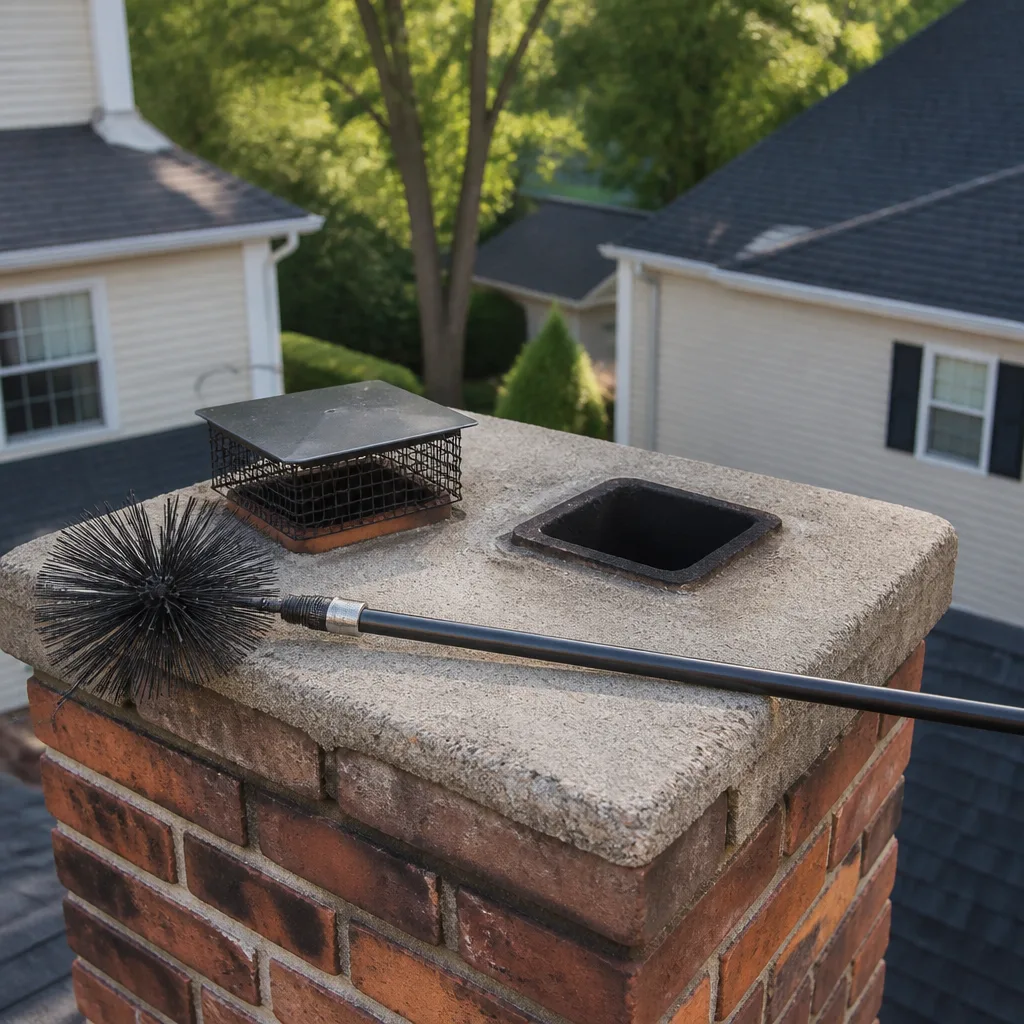
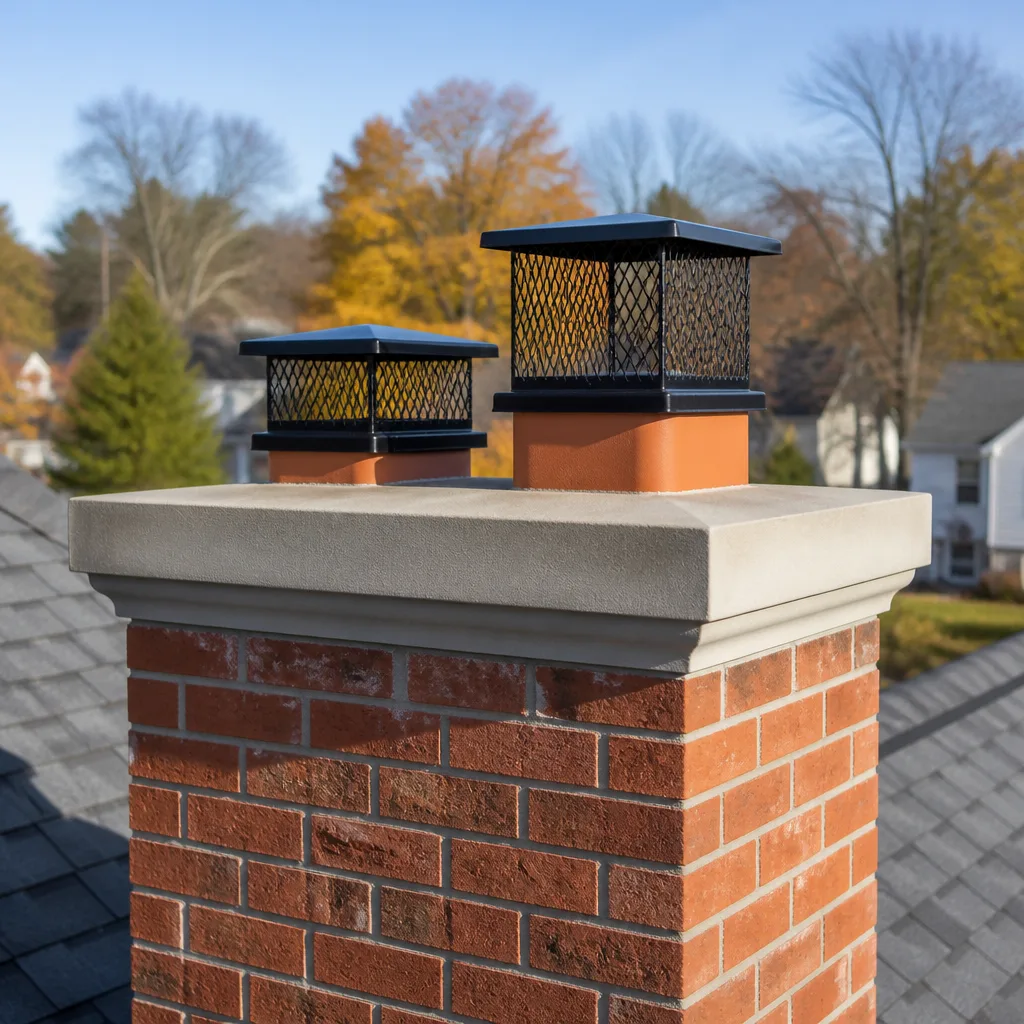
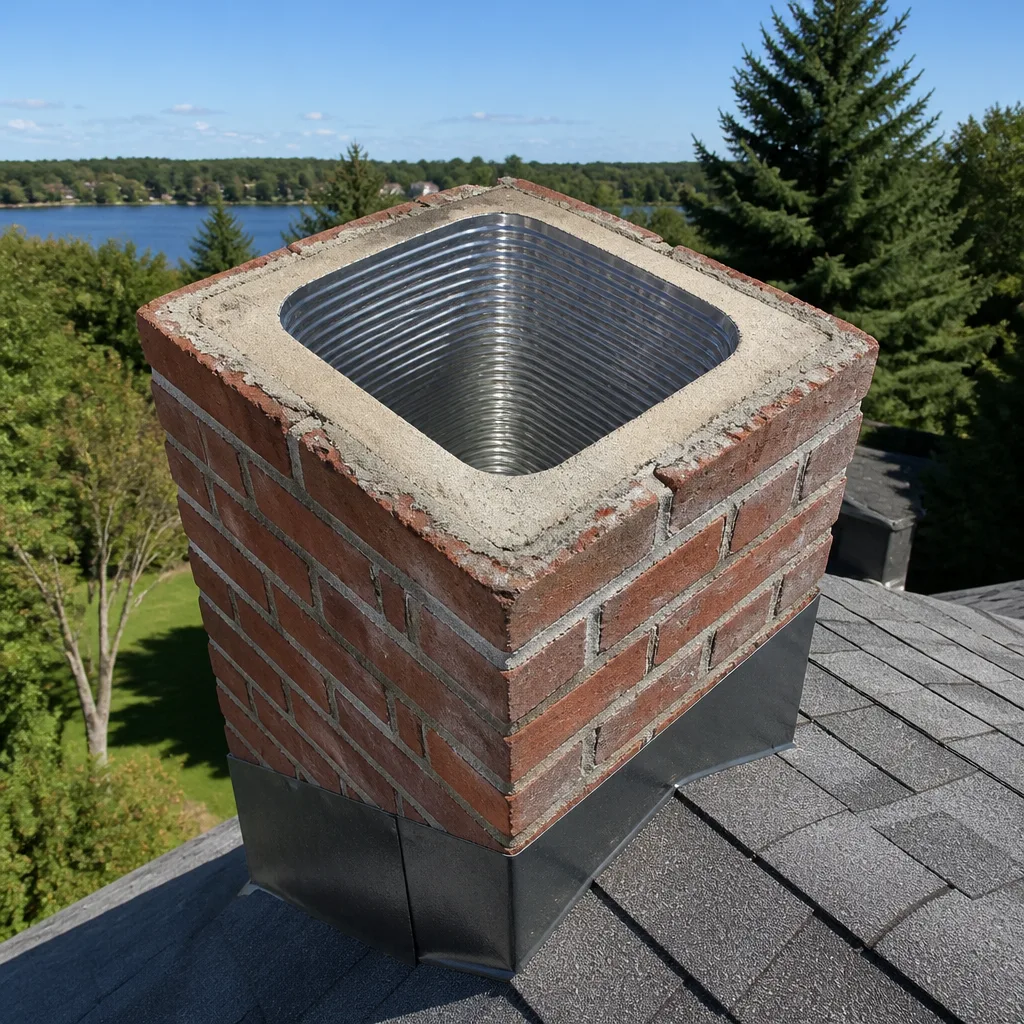
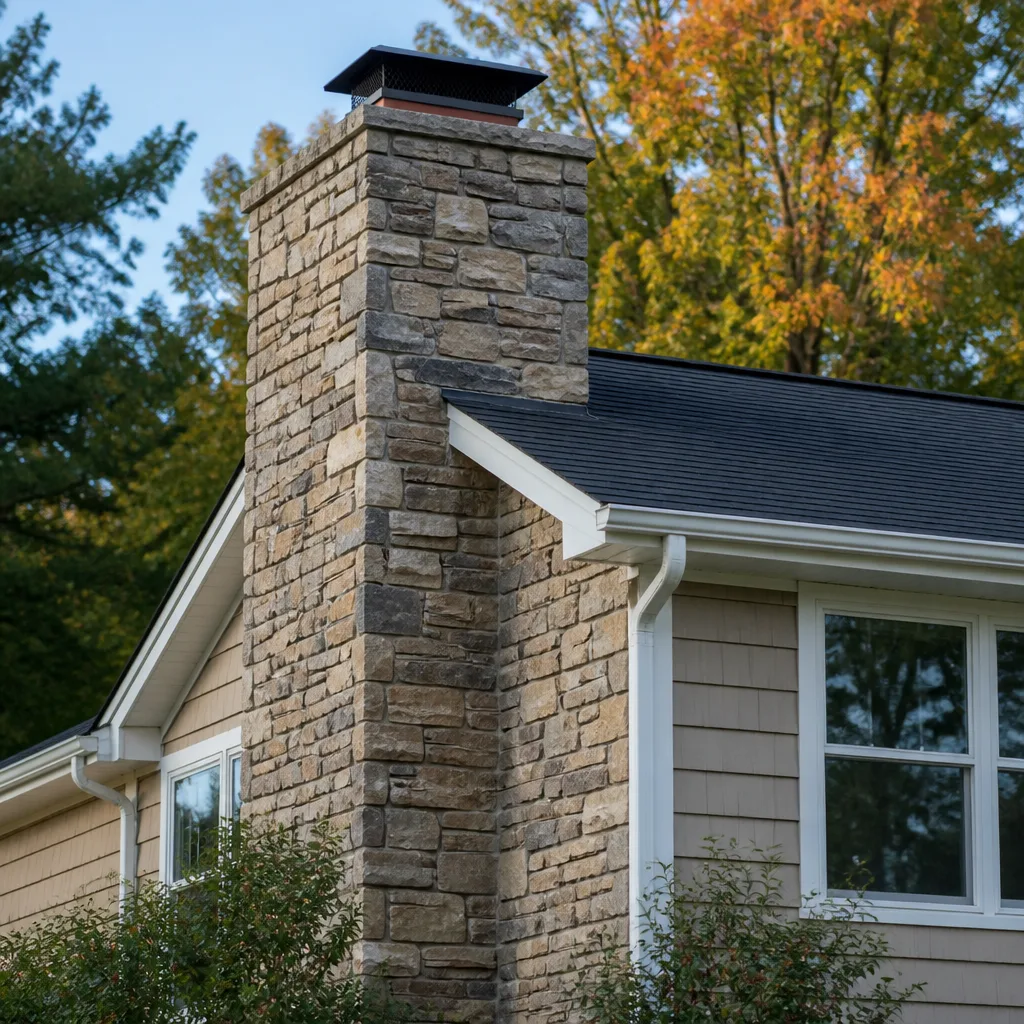
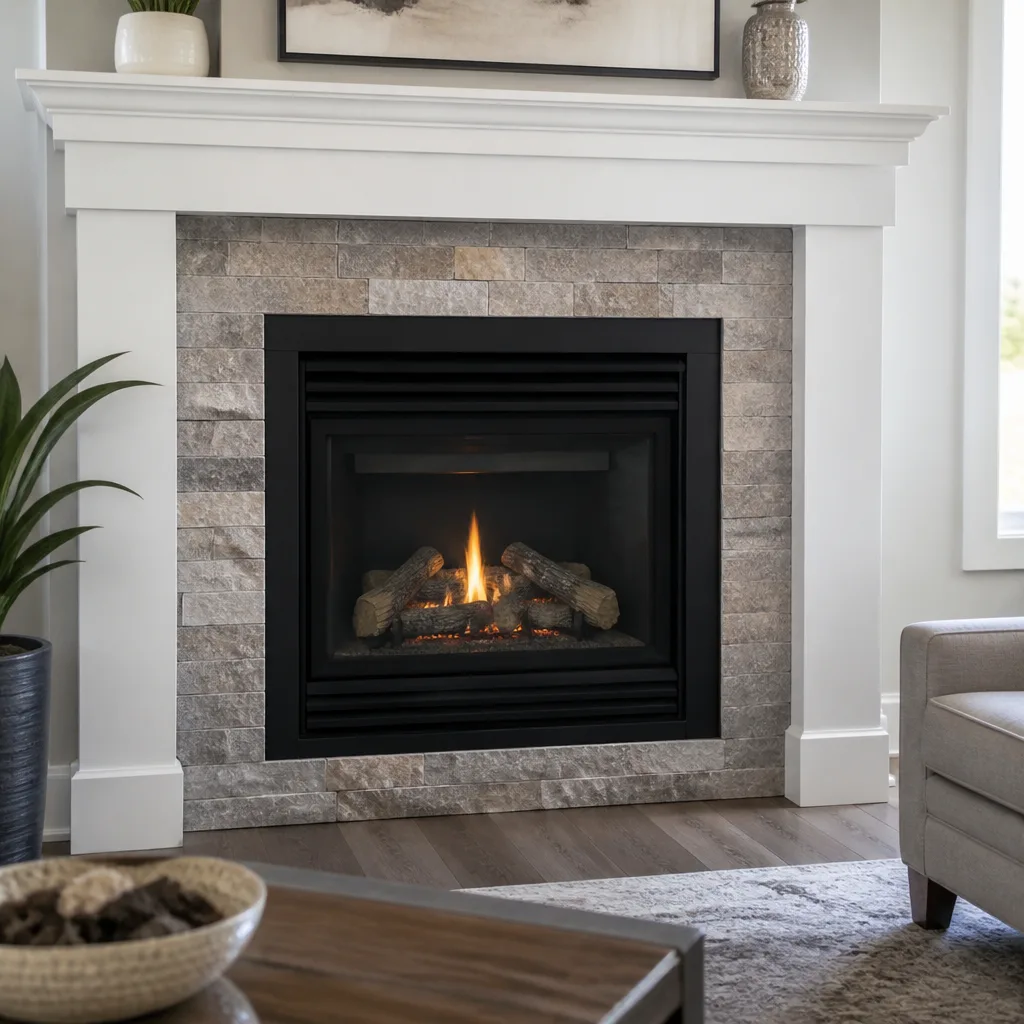
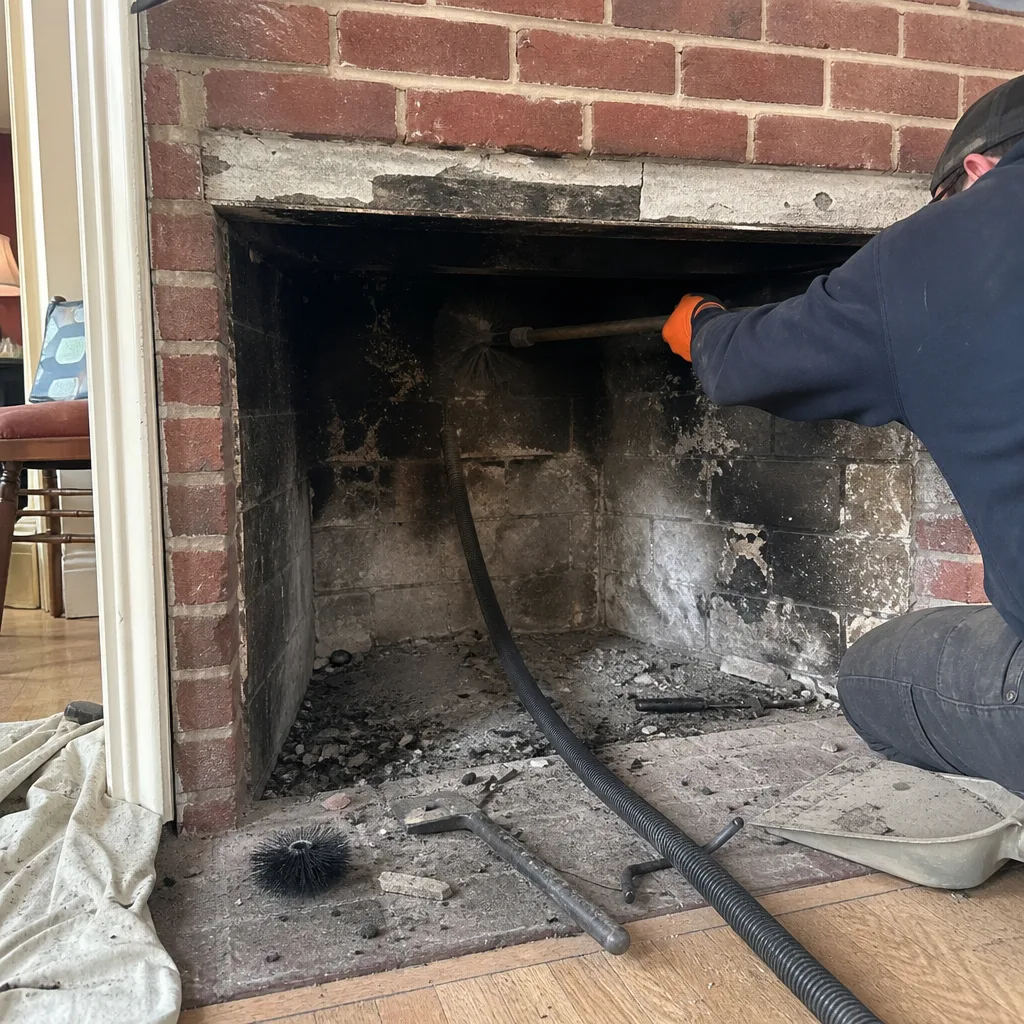 Before
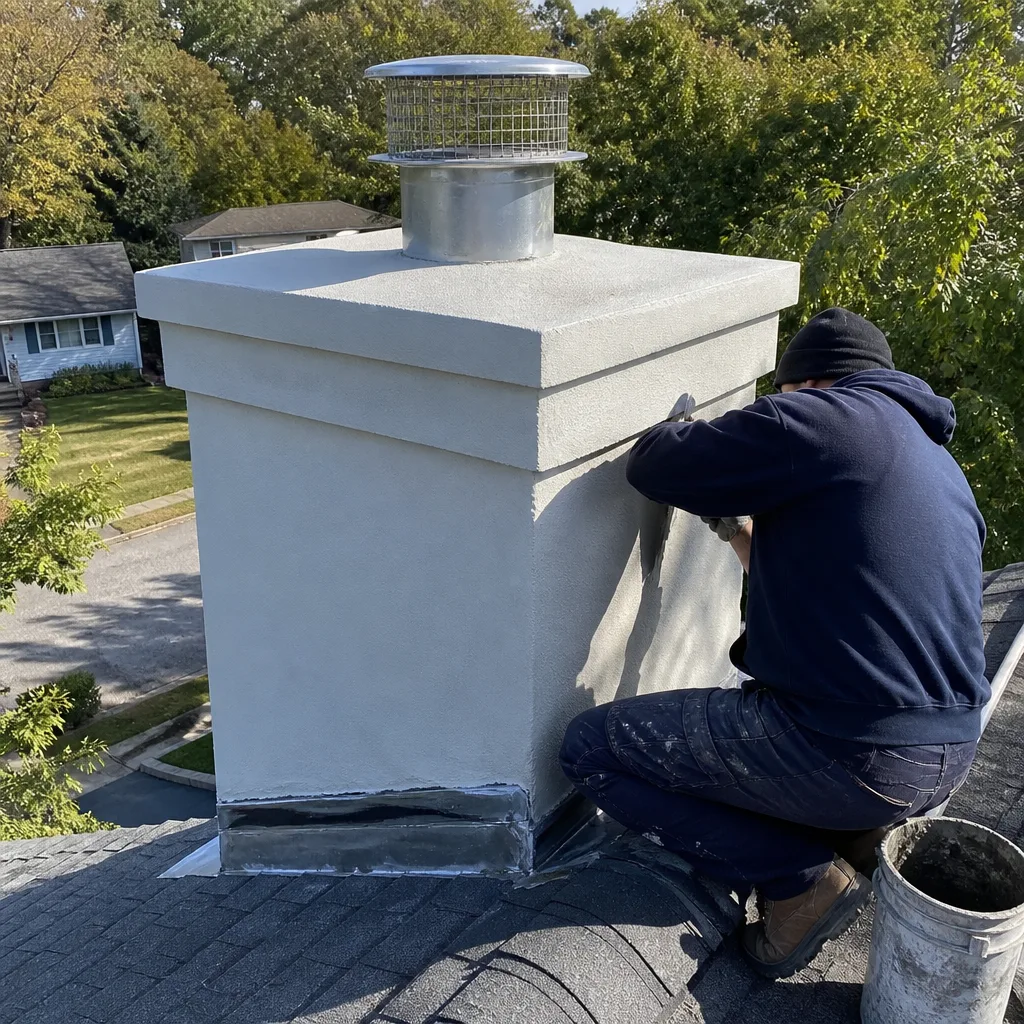 After
After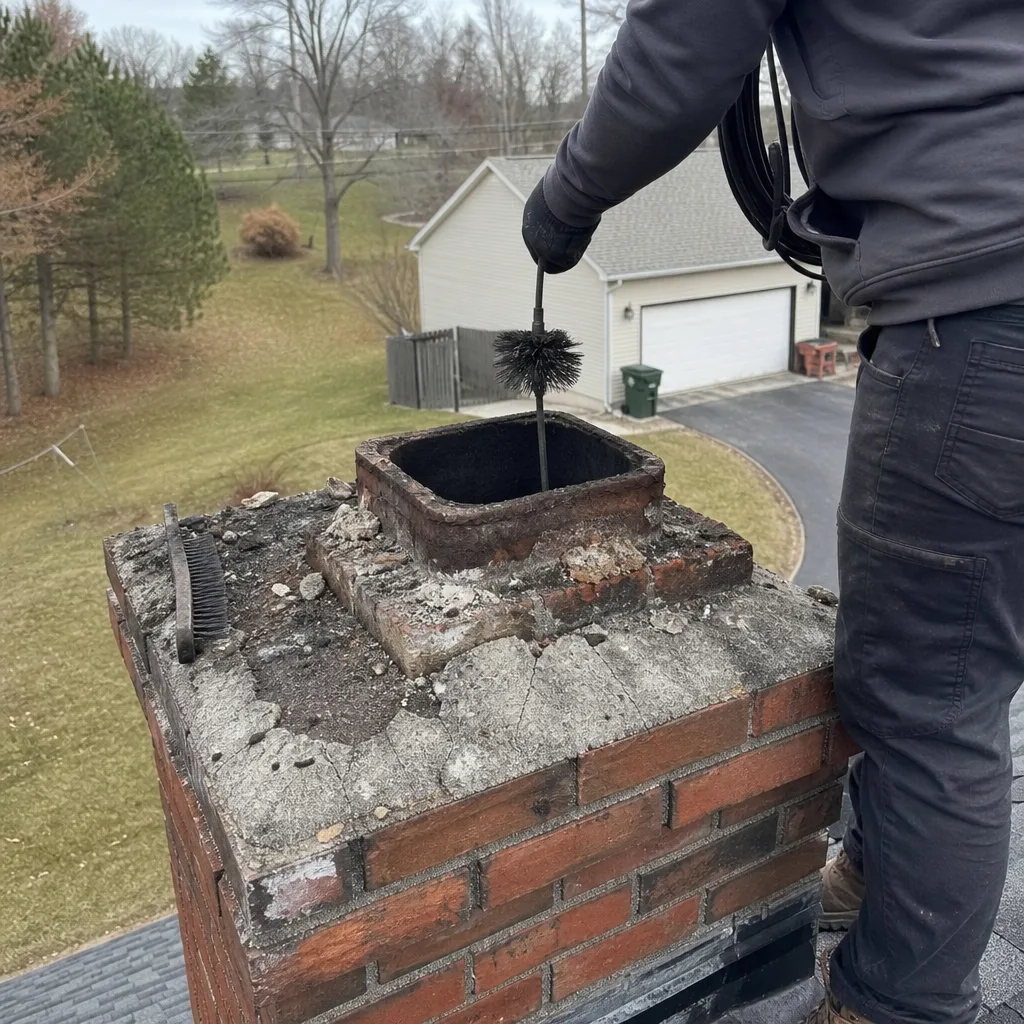 Before
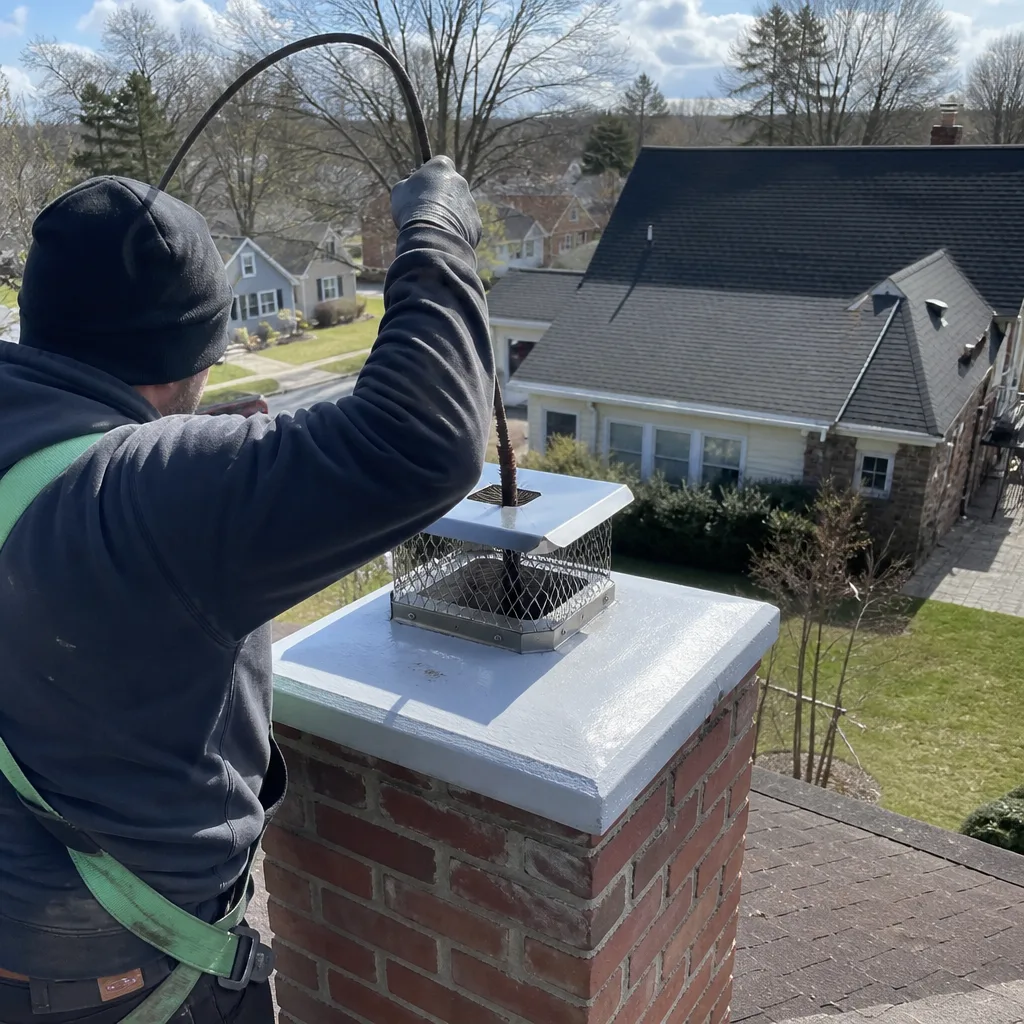 After
After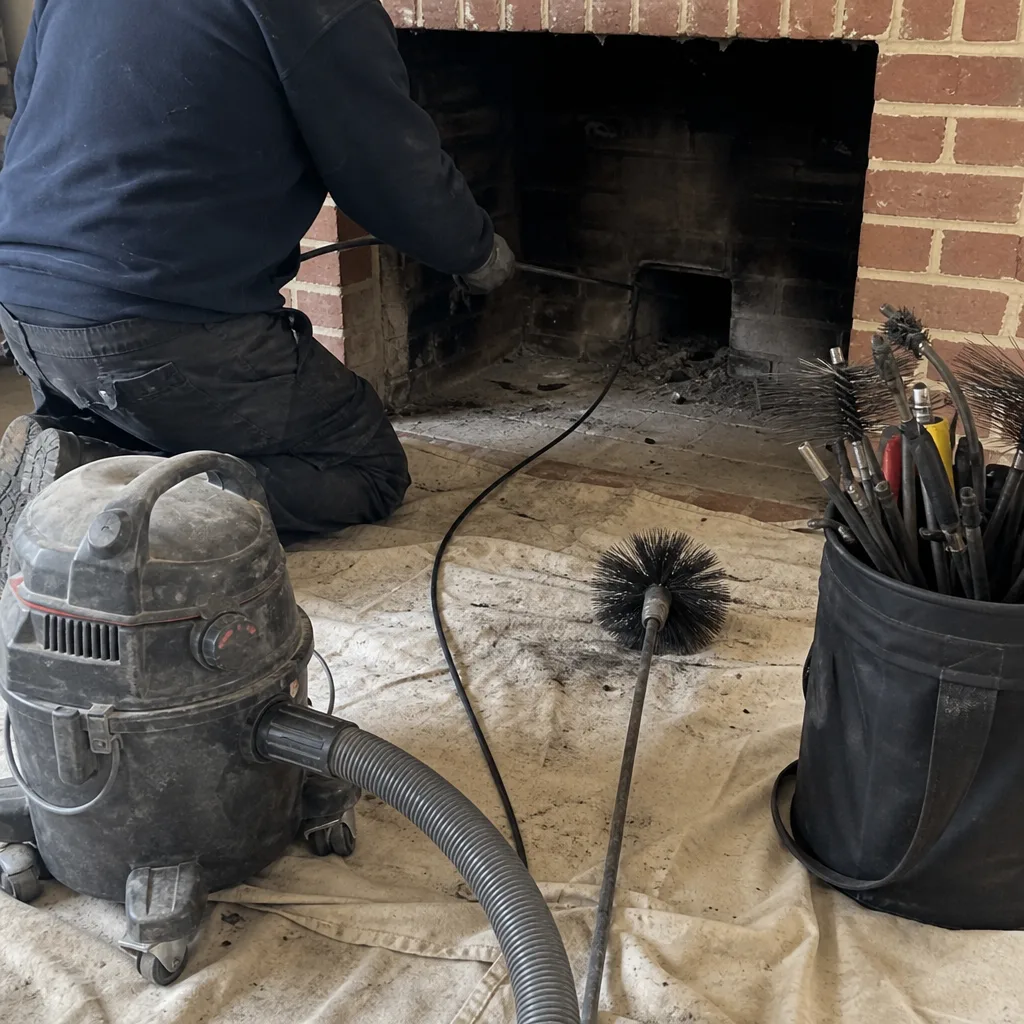 Before
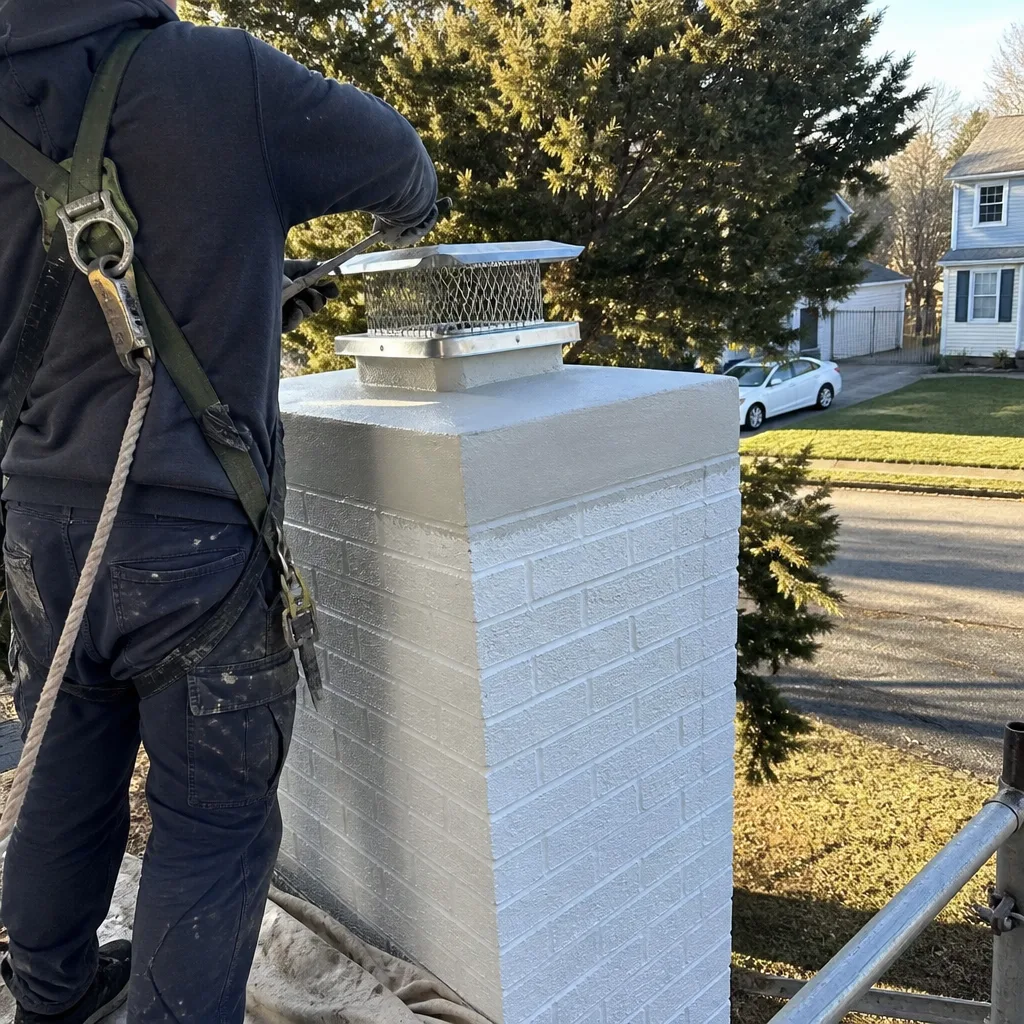 After
AfterChimney Cleaning Warning Signs: A Seaford Homeowner’s Reference Guide
The warning sign Seaford sweeps say is most consistently ignored isn’t a crack or a stain. It’s a faint campfire smell in a room where no fire has been lit. Nearly every homeowner who calls us about it has already blamed the wind, the neighbors, or the dog for weeks before realizing the smell is coming from the chimney itself. In our 42 years serving this area, we’ve found that most chimney problems are misdiagnosed by the people living with them. A smoke smell becomes “drafty windows.” White staining becomes “normal weathering.” A ticking sound becomes “the house settling.” This guide matches what you can actually see, smell, or hear to what is probably happening inside your flue, so you can describe it accurately and avoid paying for the wrong repair. For a deeper dive, see The Complete Guide to Chimney Cleaning in Seaford.
Quick Answer
Chimney warning signs fall into five categories: unusual smells (especially smoke or campfire odors when the fireplace is cold), visible staining (white efflorescence, dark soot streaks, or rust), smoke spillage into the room, sounds during burning (ticking, popping, or rumbling), and physical damage to bricks, mortar, or the chimney crown. In Seaford’s climate, where freeze-thaw cycles accelerate masonry damage and coastal humidity worsens liner corrosion, these signs progress faster than they would inland. Most require a Level-2 camera inspection to distinguish surface symptoms from hidden structural problems.
Table of Contents
- The Smell Signs: What Your Nose Detects Before Your Eyes Can
- Staining and Discoloration: Reading the Chimney’s Exterior
- Smoke Spillage and Draft Failures: When Fire Won’t Behave
- Sound Signs: Ticks, Pops, and Rumbles During Burning
- Physical Damage: Cracks, Spalling, and Crown Failure
- Symptom-to-Cause Reference: Match Your Warning Sign to the Real Problem
- Emergency vs. Schedule Soon: When to Stop Using the Fireplace
- Common Mistakes to Avoid
- When to Call a Professional
- Frequently Asked Questions
The Smell Signs: What Your Nose Detects Before Your Eyes Can
Smell is the most reliable early warning system for chimney problems, and the most frequently dismissed. Seaford homeowners, especially those in older neighborhoods like Harbor Green or near the waterfront, often report “a faint campfire smell” that seems to come and go with humidity changes. This is not normal. A properly functioning chimney with an intact liner and correct draft should smell like nothing when cold.
Here is what specific smells indicate:
- Campfire or smoky odor when the fireplace is cold: This almost always signals a draft reversal, where air is flowing down the flue instead of up. The cause is usually a cracked or deteriorated liner that has lost its ability to maintain proper draft pressure, or a blockage (bird nest, collapsed liner section, or heavy creosote buildup) that has disrupted airflow. In Seaford’s coastal environment, we’ve seen liner corrosion accelerate where salt air meets combustion gases, creating pinhole leaks that destroy draft efficiency long before visible damage appears.
- Musty or mildew smell: Water is entering the chimney system. The source could be a failed crown, deteriorated flashing where the chimney meets the roof, or porous brick that has lost its waterproofing. In Seaford, where we average 47 inches of rain annually and see frequent nor’easter-driven wind rain, water intrusion is the single most common cause of premature liner failure. The musty smell means moisture has reached the interior and is likely already degrading the liner surface.
- Sharp, acrid, or chemical smell: This can indicate creosote glazing, where combustion byproducts have formed a hardened, tar-like coating that releases stronger odors as temperatures fluctuate. It can also signal improper fuel use, such as burning treated wood or plastics. Either way, the flue needs inspection before the next fire.
- Rotten egg or sulfur smell: If you have a gas fireplace or insert, this is an immediate emergency. Shut off the gas and call your utility. For wood-burning systems, a sulfur smell usually indicates a severely blocked flue or downdraft pulling sewer gas through connected venting, which is rare but serious.
The critical distinction: a cold chimney should smell neutral. Any persistent odor means something is wrong with the pressure balance, the liner integrity, or the moisture barrier. Waiting for visible damage means waiting for a more expensive repair.
Staining and Discoloration: Reading the Chimney’s Exterior
Chimney stains are diagnostic, not decorative. The color, location, and pattern of discoloration tell a trained sweep more than a homeowner might expect. In Seaford, where many homes were built during the 1950s and 1960s suburban expansion, original chimneys are now 60 to 70 years old. Their brick and mortar have endured thousands of freeze-thaw cycles, and the staining patterns reflect that history.
White Efflorescence: The Moisture Diagnosis
White, powdery staining on exterior brick is called efflorescence. It is not cosmetic weathering. It is crystallized salt left behind when water moves through masonry, dissolves minerals, and evaporates at the surface. The presence of efflorescence proves three things: water is entering the masonry, it is moving through the wall system, and it is reaching the surface. Each of those “proofs” represents progressive damage.
What efflorescence predicts about interior liner condition: water that moves through brick also moves past the liner. In clay tile liners, this causes spalling and cracking. In stainless steel liners, it accelerates corrosion at joints and termination points. In unlined chimneys, which we still encounter in Seaford’s older cape and ranch stock, the water reaches the masonry directly and causes rapid deterioration.
The severity scale we use during inspections:
- Light, patchy efflorescence: Early-stage moisture intrusion. Often correctable with crown repair, repointing, and waterproofing treatment using professional-grade materials.
- Heavy, streaking efflorescence with flaking: Active, ongoing water movement. Liner inspection is mandatory. We frequently find cracked tiles or corroded sections at this stage.
- Efflorescence combined with spalling (flaking brick surface): Advanced freeze-thaw damage. The masonry itself is failing. Liner replacement and partial rebuild are commonly needed.
Dark Soot Streaks
Black or brown streaking at the chimney top or down the exterior face indicates smoke escape at a joint or crack. This is often the first visible sign of a liner breach or crown crack that is allowing combustion gases to vent into the chimney cavity rather than up the flue. In Seaford’s tighter modern homes, this can also pressurize wall cavities and cause odors in second-floor bedrooms.
Rust Staining
Red-brown stains below metal components, especially the damper frame or firebox, mean corrosion from condensation. This is common where a chimney is exterior on three sides and stays cold, causing combustion gases to condense before exiting. The fix is usually a properly sized liner with insulation, which maintains flue temperature above the dew point.
Smoke Spillage and Draft Failures: When Fire Won’t Behave
Smoke entering the room during lighting, or lingering after the fire is established, is never normal. But the cause matters enormously for the repair, and homeowners often misattribute the source. The two primary categories, house pressure problems and flue obstruction problems, require completely different solutions.
House Pressure Problems
Modern Seaford homes, especially those with updated HVAC systems, tight windows, and range hoods, can become negatively pressurized. The house exhausts more air than it admits, so it pulls makeup air down the chimney. Symptoms include:
- Smoke spillage only when the furnace or kitchen fan is running
- Difficulty starting a fire on windy days but normal operation in calm weather
- Cold air rushing down the chimney when no fire is lit
- Smoke problems that began after a renovation, window replacement, or HVAC upgrade
The fix is not chimney repair. It is house pressure balancing, often through dedicated combustion air supply, damper adjustments, or controlled ventilation. A sweep who diagnoses “you need a new liner” without checking house pressure is selling the wrong repair.
Flue Obstruction Problems
True flue obstruction causes different symptoms:
- Smoke spillage that worsens as the fire grows, regardless of house fans
- A fire that smolders and produces excessive smoke even with dry wood and open damper
- Visible smoke delay, where smoke hangs in the firebox before slowly rising
- Carbon monoxide detector activation (this is an emergency; evacuate and call 911)
Obstructions we remove regularly in Seaford include collapsed clay tile sections (common in 1960s construction with inferior tile), bird nests from uncapped flues, and glazed creosote that has reduced flue diameter by 30% or more. Each requires different removal and repair.
The diagnostic test any homeowner can perform: open a window near the fireplace before lighting. If smoke spillage stops or improves dramatically, house pressure is likely the cause. If it continues unchanged, call for a camera inspection of the flue.
Sound Signs: Ticks, Pops, and Rumbles During Burning
Chimneys make sounds. Distinguishing normal thermal expansion from structural distress is a skill developed over years of listening. Here is what we have learned in four decades of Seaford chimney work.
Ticking Sounds
Rapid, metallic ticking as the fire heats up usually indicates a stainless steel liner that is expanding against a clay tile fragment, or a liner that has detached from its top support and is shifting in the flue. In Seaford’s stock of 1950s ranches with original construction, we also hear this when a retrofitted liner was improperly sized and contacts the damper frame. The sound stops when the metal reaches operating temperature and expansion ceases. Left unaddressed, the friction point wears through the liner wall.
Popping or Cracking Sounds
Sharp pops from within the masonry, especially during the first 15 minutes of burning, are serious. They indicate moisture trapped inside bricks or mortar joints that is flash-boiling to steam. The pressure build-up spalls the brick face or blows out mortar. This is common in Seaford where wind-driven rain saturates chimney tops, and homeowners delay crown repair because “it looks fine from the ground.” By the time you hear popping, water has penetrated deep enough to threaten structural integrity.
Rumbling or Gurgling
A low rumble, sometimes described as “like a distant train,” indicates turbulent airflow in an oversized or partially blocked flue. In unlined chimneys, which remain common in Seaford’s pre-1960 housing, the flue is often substantially larger than modern appliances require. The gases cool too quickly, draft weakens, and the resulting turbulence produces audible vibration. The correct fix is a properly sized insulated liner, not continued sweeping of a fundamentally mismatched system.
Wind Whistling or Howling
Constant wind noise, even when the fireplace is cold, points to a missing or failed chimney cap, or a crown with significant cracking that has opened air passages. Beyond the noise, this admits rain, animals, and debris. A Gelco or Famco cap properly sized to the flue terminates the noise and protects the interior.
Physical Damage: Cracks, Spalling, and Crown Failure
Visible damage demands prompt assessment, but not all damage demands immediate repair. The key is distinguishing active, progressing problems from stable conditions that can be monitored.
Crown Cracks
The concrete crown at the chimney top is not decorative. It sheds water away from the flue and masonry walls. Hairline cracks that are dry and stable can sometimes be sealed with professional-grade crown coating. Active cracks that widen each season, or that channel water directly toward the flue opening, require crown rebuilding. In Seaford, where winter temperatures fluctuate above and below freezing weekly, crown deterioration accelerates rapidly once cracking begins.
Brick Spalling
When brick faces flake off, exposing the porous interior, freeze-thaw damage is active and ongoing. This cannot be sealed or painted over. The damaged brick must be replaced, and the source of water entry eliminated. We see this most often on Seaford’s south- and west-facing chimney exposures, where sun-driven melting followed by overnight refreezing creates maximum stress.
Mortar Joint Erosion
Recessed, powdery, or missing mortar joints are repointing candidates. The threshold for action: mortar recessed more than half its original depth, or joints eroded to the point that water can pool on horizontal surfaces. Repointing with proper mortar matching (critical for historic and vintage chimneys) restores structural integrity and prevents the accelerated brick damage that follows joint failure.
Flue Tile Cracks
These are not visible from outside and rarely visible from the firebox without a mirror and light. They are detected during Level-2 camera inspection. A cracked flue tile allows combustion gases to enter the chimney cavity, where they can migrate into living spaces or accelerate masonry deterioration. Cracked tiles cannot be repaired; they must be replaced or relined.
Symptom-to-Cause Reference: Match Your Warning Sign to the Real Problem
| Warning Sign | Most Likely Source | Urgency Level | Typical Repair Path |
|---|---|---|---|
| Campfire smell, cold fireplace | Draft reversal from liner breach or blockage | Schedule within 2 weeks; do not use until inspected | Camera inspection; liner repair or replacement with HeatShield or stainless steel |
| White powder on exterior brick | Active moisture intrusion through masonry | Schedule within 1 month; monitor for acceleration | Crown repair, repointing, waterproofing; liner inspection for moisture damage |
| Smoke spillage, worsens with fire size | Flue obstruction or liner failure | Stop using; schedule emergency inspection | Obstruction removal; liner replacement if damaged |
| Smoke spillage, improves with open window | House negative pressure | Schedule within 2 weeks | Pressure testing; combustion air supply or ventilation adjustment |
| Ticking during heat-up | Liner contact with masonry or damper | Schedule within 1 month | Liner adjustment or resizing |
| Popping or cracking during burn | Moisture flash-boiling in masonry | Stop using; schedule emergency inspection | Moisture source elimination; brick replacement; crown rebuild |
| Rumbling, low vibration | Oversized or unlined flue | Schedule within 1 month | Properly sized insulated liner installation |
| Dark soot streaks on exterior | Smoke escape at liner breach or crown crack | Schedule within 2 weeks; do not use until inspected | Crown repair; liner section replacement |
| Rust staining below damper | Condensation corrosion from cold flue | Schedule within 1 month | Insulated liner to maintain flue temperature |
| Wind howling, cold draft when idle | Missing or failed chimney cap | Schedule within 1 month | Proper cap installation with Gelco or Famco |
Emergency vs. Schedule Soon: When to Stop Using the Fireplace
Not every warning sign demands immediate evacuation. Some permit scheduled repair. The distinction protects you from unnecessary anxiety and from the contractor who profits from it.
Stop using the fireplace now. Call for inspection before next use:
- Carbon monoxide detector activation with fireplace operation
- Visible flames or glowing material in the chimney exterior or attic space
- Popping or cracking sounds from masonry during burning
- Smoke spillage that does not improve with open windows or adjusted damper
- Strong gas odor from gas fireplace or insert
- Brick or mortar pieces falling into the firebox or hearth
Schedule inspection within two weeks. Minimize use until then:
- Persistent campfire smell when cold
- Dark soot streaks on exterior
- Ticking or minor metallic sounds during heat-up
- White efflorescence that is new or spreading
Schedule routine maintenance. Normal use permitted:
- Annual inspection due based on usage (every 50 fires or annually, whichever comes first)
- Minor mortar erosion stable for multiple seasons
- Chimney cap showing surface rust but intact
The honest threshold: if you would hesitate to fall asleep with the fire burning, stop using it until a professional with a camera has shown you the interior condition.
Common Mistakes to Avoid
- Blaming the wind for smoke smells. Seaford’s coastal breezes are real, but they do not create persistent campfire odors in a properly drafting chimney. The wind exposes a draft problem; it does not create one.
- Treating efflorescence as cosmetic. Power-washing or painting over white staining hides the symptom while water continues destroying the liner. The correct response is moisture source elimination and liner inspection.
- Assuming a new liner fixes draft problems. If house negative pressure is the cause, an expensive liner replacement will not solve smoke spillage. Pressure testing must precede major repair recommendations.
- Ignoring sounds that “go away after a few minutes.” Ticking that ceases at operating temperature indicates ongoing metal-on-masonry contact that wears through liner walls. The silence is temporary; the damage is cumulative.
- Delaying inspection until “burning season.” In Seaford, chimney professionals book heavily from October through December. Scheduling in spring or summer means faster response, more thorough inspection conditions, and time to complete repairs before first frost.
- Accepting repair recommendations without photo evidence. A trustworthy sweep shows you what they see. Our Level-2 inspections end with photos you can see and a plain-English verdict. If a contractor cannot or will not document the problem, the problem may not exist.
When to Call a Professional
Call when any warning sign persists for more than a few days, when a new symptom appears after a period of normal operation, or when you cannot confidently distinguish between the categories in this guide. Not sure who to trust? Read How to Hire a Chimney Cleaning Contractor in Seaford: A Step-by-Step Guide. The cost of a professional inspection is modest compared to the cost of misdiagnosed repair or undetected hazard.
Hearthstone Chimney Co. offers free estimates in Seaford. Our Level-2 camera inspections document every finding with photos and a written verdict. If we recommend work, we explain why and show you the evidence. If something can safely wait, we say so plainly. No pressure, no surprises on the bill. Call (516) 614-4632 to schedule.
Frequently Asked Questions
A standard chimney sweep and inspection in Seaford typically ranges from $150 to $300, depending on accessibility, flue condition, and whether a Level-2 camera inspection is needed. Our $89 Seasonal Tune-Up covers basic sweeping and visual inspection for qualifying systems. Call (516) 614-4632 for an exact quote; estimates are free.
You need a new liner only if the existing one is cracked, corroded, improperly sized, or absent. We determine this with a camera inspection that produces photos you can see. If the liner is sound, we say so. If it can be repaired with HeatShield cerfractory foam rather than full replacement, we present that option. No recommendation is made without visual documentation.
The National Fire Protection Association recommends annual inspection for all chimney systems, and sweeping as needed based on creosote accumulation. In Seaford, where many homeowners burn seasoned hardwood and use their fireplaces 30 to 50 times per season, annual sweeping is typical. Heavy use of softwoods or unseasoned wood may require mid-season cleaning.
Skipped maintenance leads to creosote accumulation, which increases chimney fire risk, and undetected liner damage, which allows combustion gases including carbon monoxide to enter living spaces. In Seaford’s older housing stock, we also see accelerated masonry deterioration from unaddressed moisture intrusion, turning $800 crown repairs into $4,000 rebuilds. The cost of prevention is always lower than the cost of remediation.
Summer humidity and higher outdoor temperatures reverse the temperature differential that drives chimney draft. Warm, moist air sinks down the flue, carrying odors from creosote deposits and any moisture-affected liner material. The smell is worse in summer because the draft is weaker, not because the underlying problem is new. A proper inspection identifies whether the solution is sweeping, liner repair, or moisture elimination.
Light, stable efflorescence does not require immediate fireplace shutdown, but it does require prompt inspection to identify the moisture source and assess liner condition. Heavy, streaking efflorescence with any accompanying interior smell or smoke spillage means stop using the fireplace until a professional evaluates whether water has compromised the flue’s ability to contain combustion gases safely.
The Bottom Line
Chimney warning signs are reliable if you read them correctly. The smell of smoke when no fire burns, white staining that signals hidden moisture, sounds that distinguish liner wear from masonry failure, and smoke behavior that reveals house pressure versus flue obstruction, each point to a specific cause with a specific repair. Misreading them leads to wrong repairs, wasted money, and continued hazard. Reading them accurately, with the help of documented camera inspection, leads to correct fixes done once. In Seaford’s climate and housing stock, where salt air, freeze-thaw cycles, and decades of wear converge, the chimney that seems fine from the outside often conceals predictable problems on the inside. The homeowner who knows what to notice, and what it means, is the homeowner who spends wisely and sleeps soundly. Explore more guides & resources to keep your chimney safe year-round.
Written by Russell Haines, Owner at Hearthstone Chimney Co., serving Seaford since 2014.