
Last updated September 10, 2026
Level 1 sweep and inspection to the NFPA 211 annual standard - flue, crown, cap, and flashing checked and photographed
Chimney sweep logs do not sweep chimneys. They loosen some creosote - which then falls where a brush and vacuum still have to collect it.
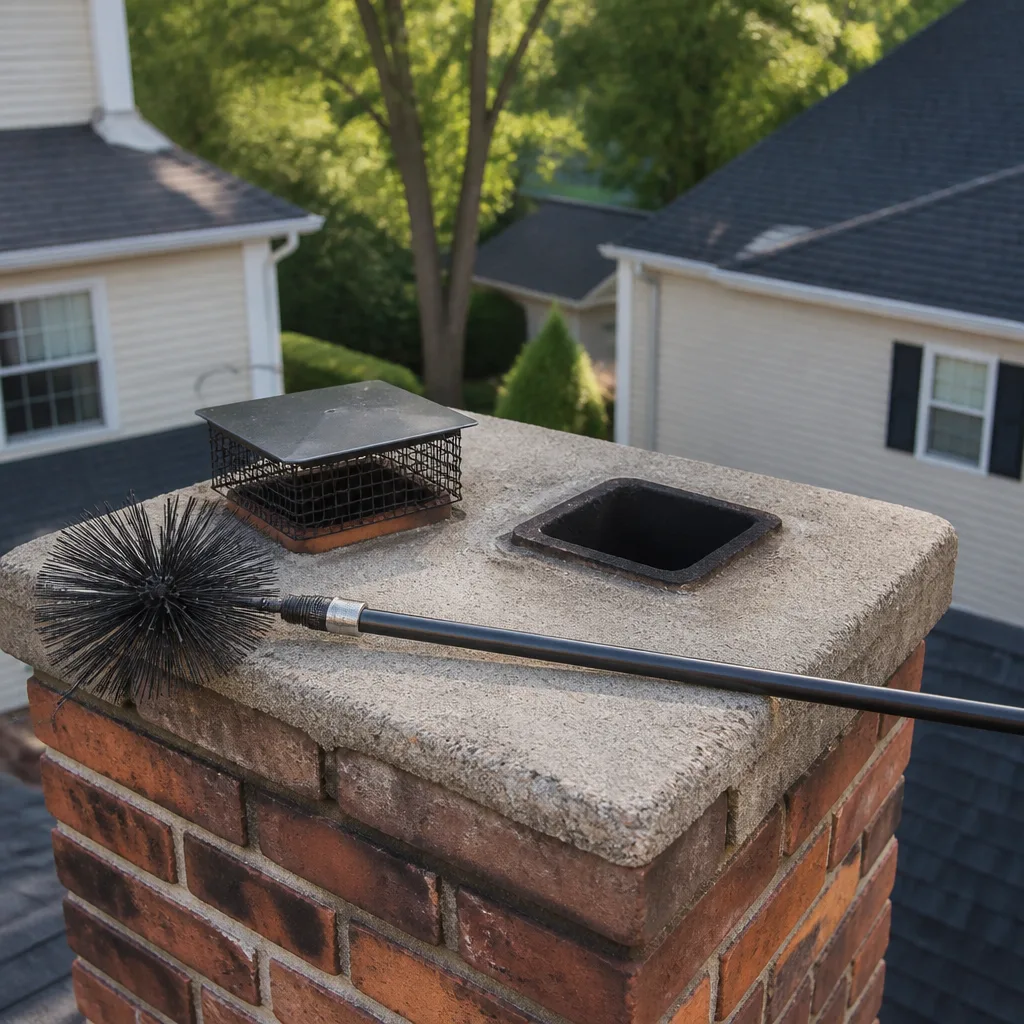
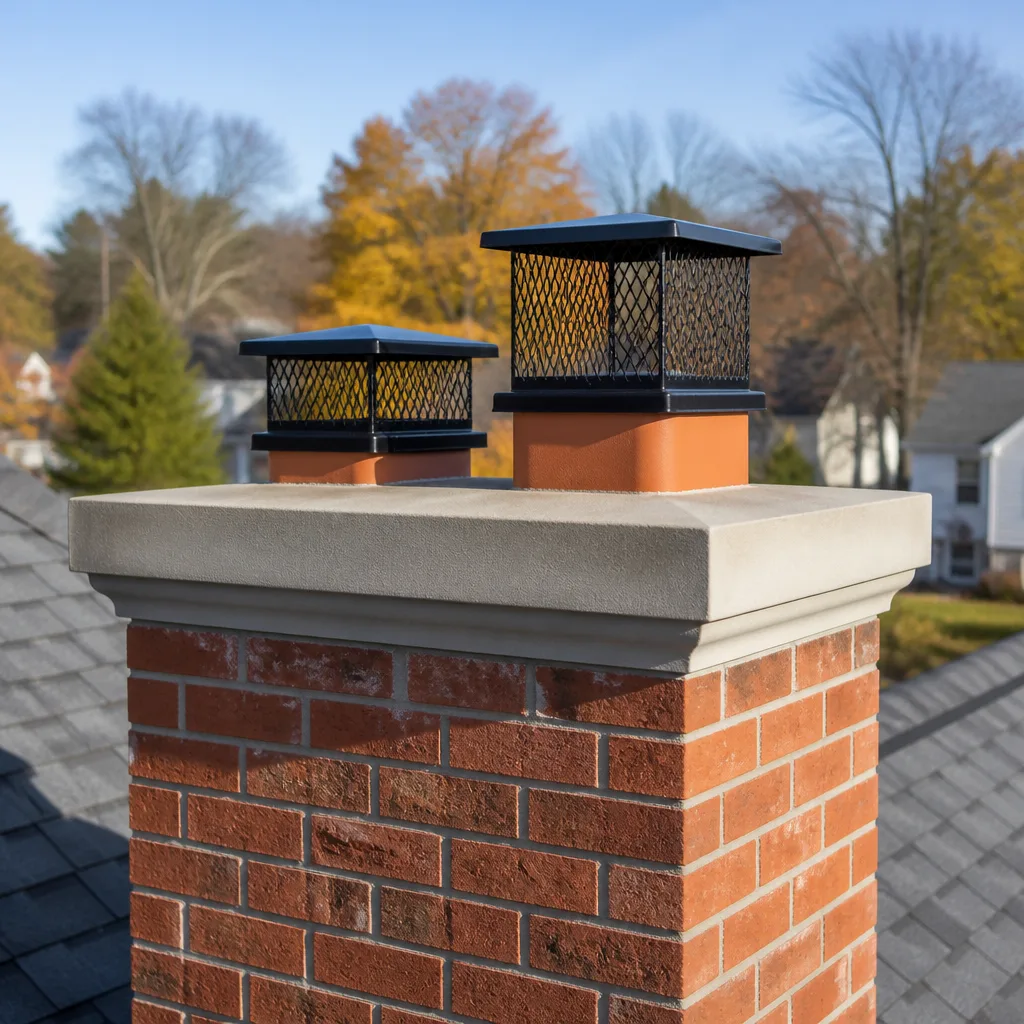
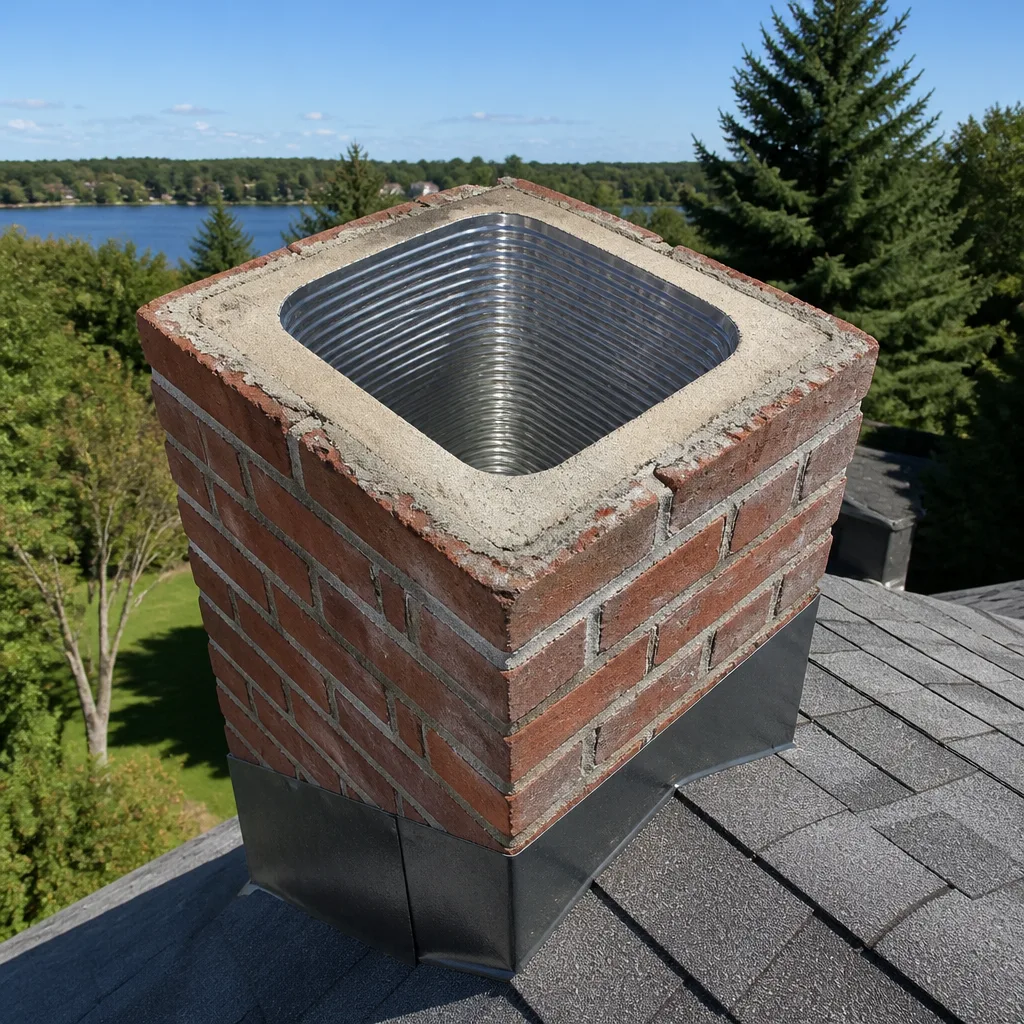
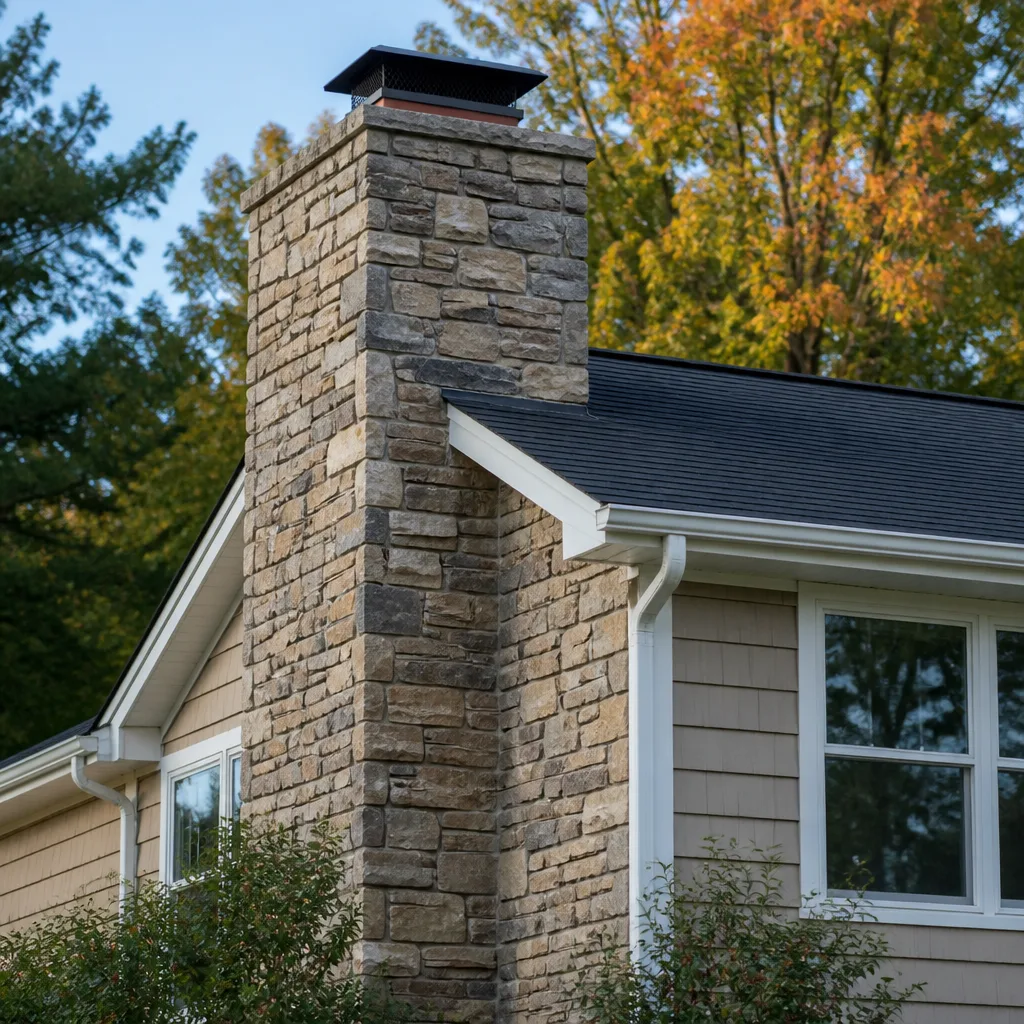
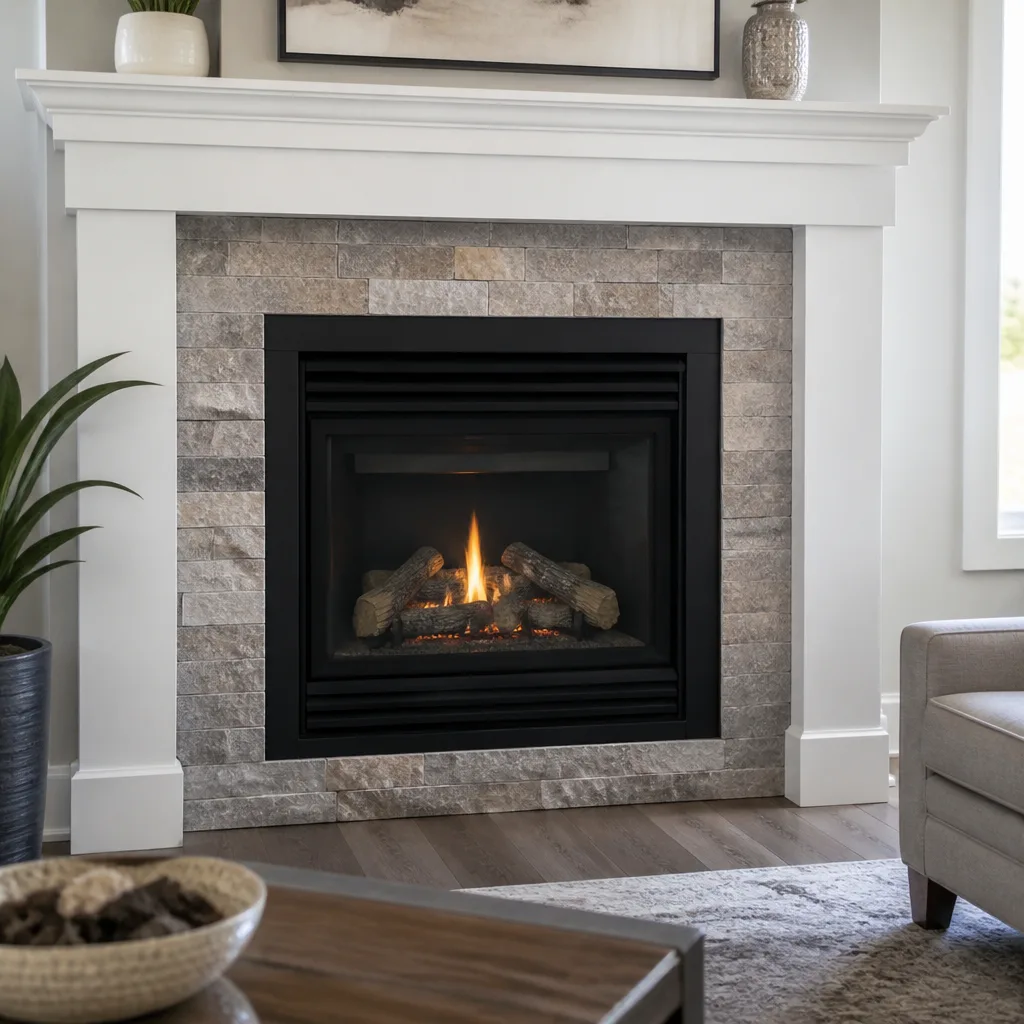
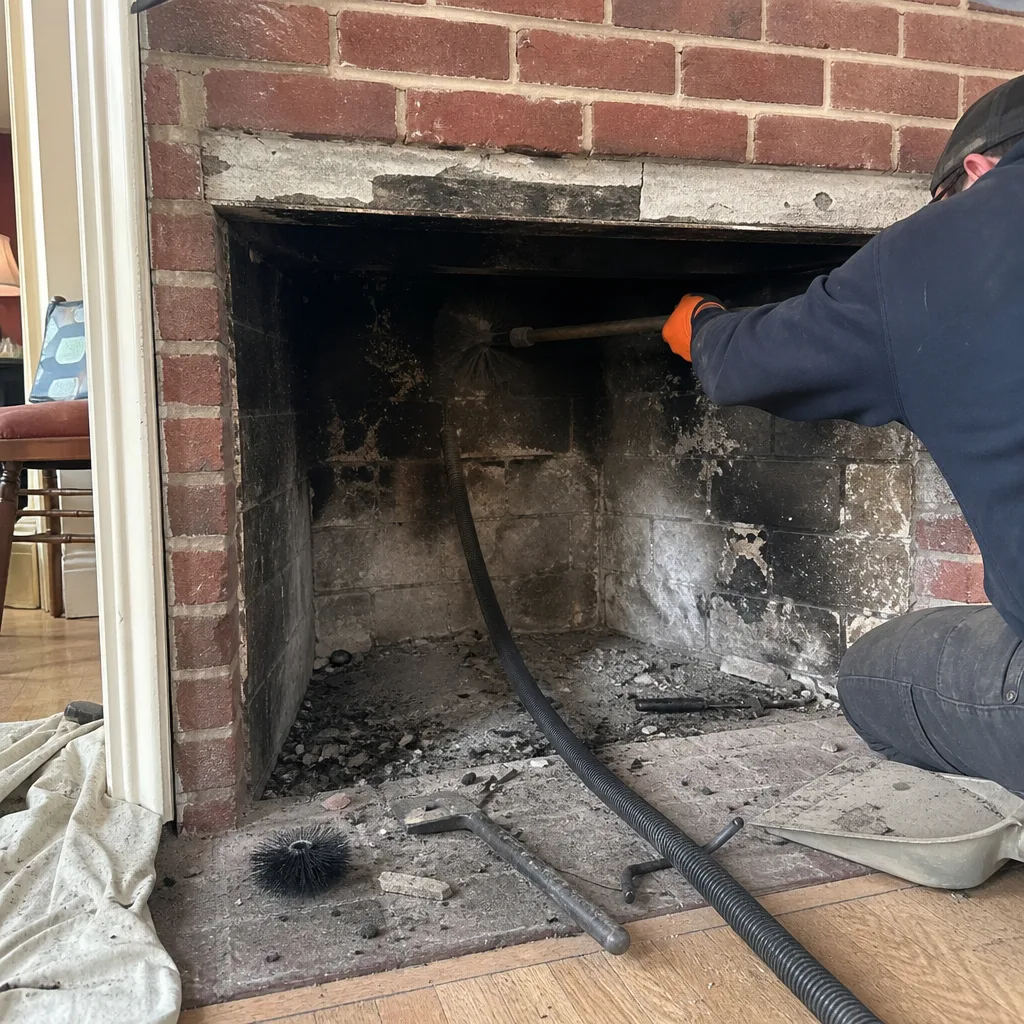 Before
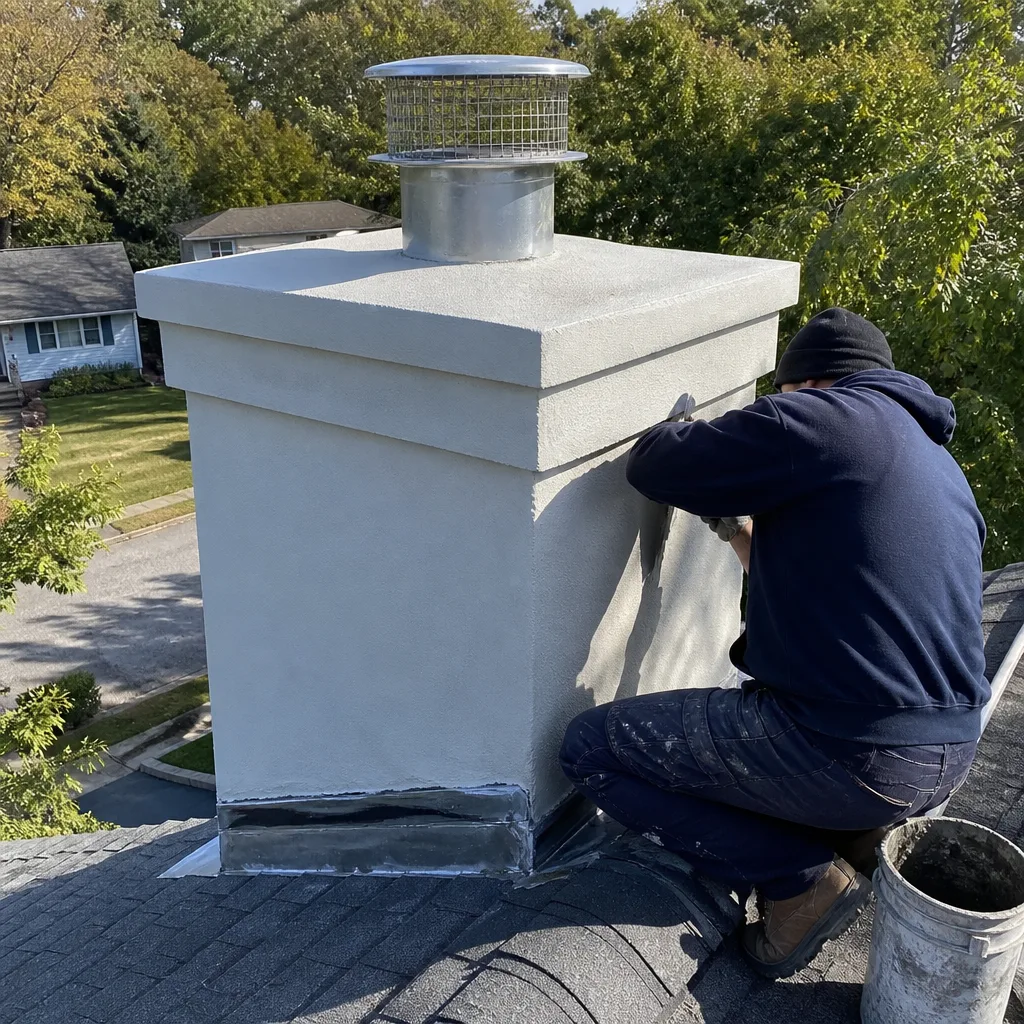 After
After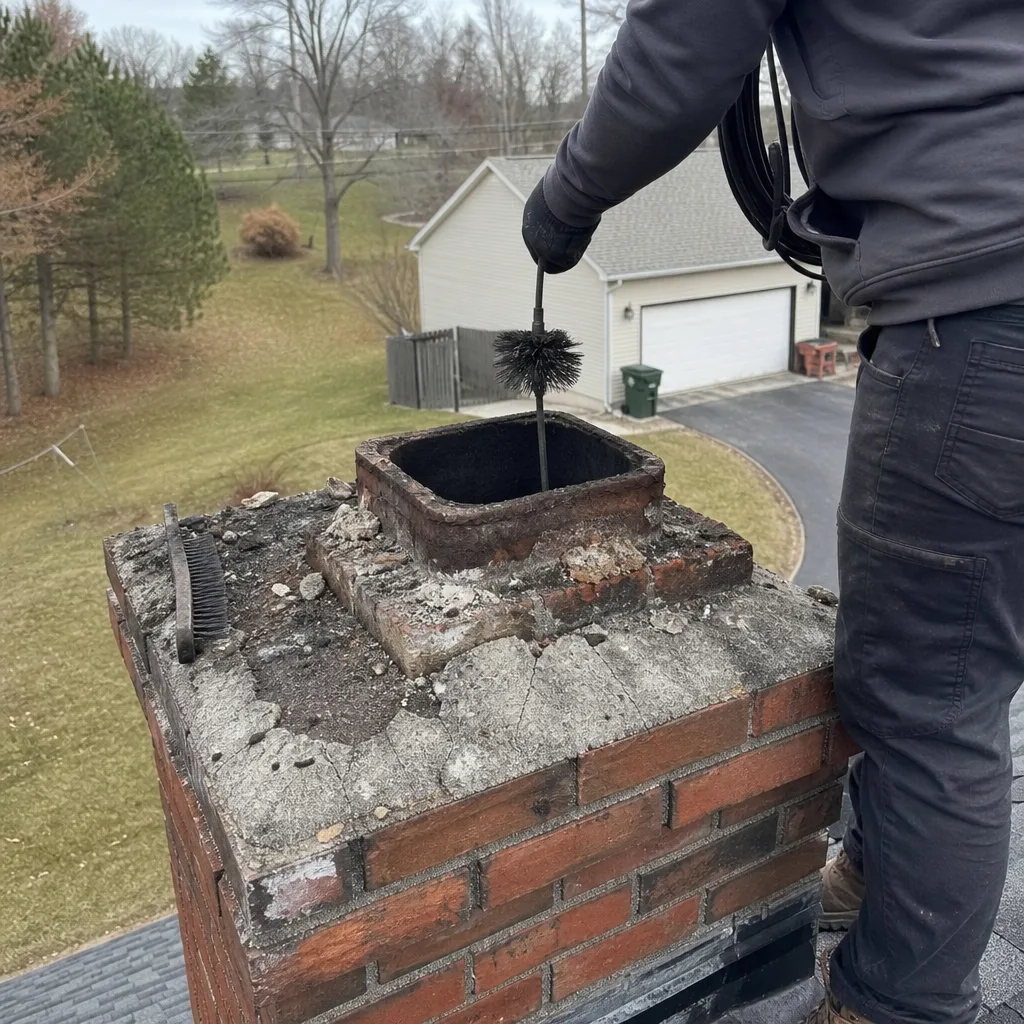 Before
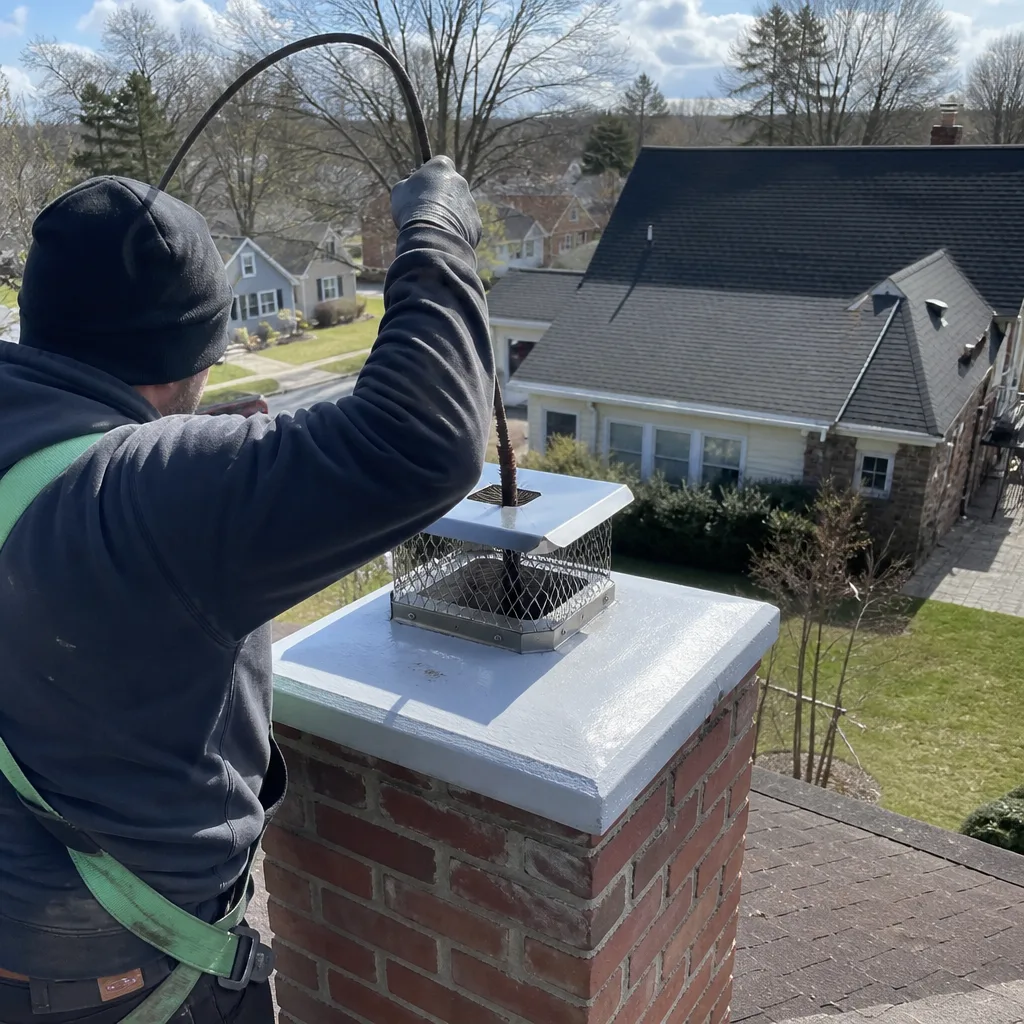 After
After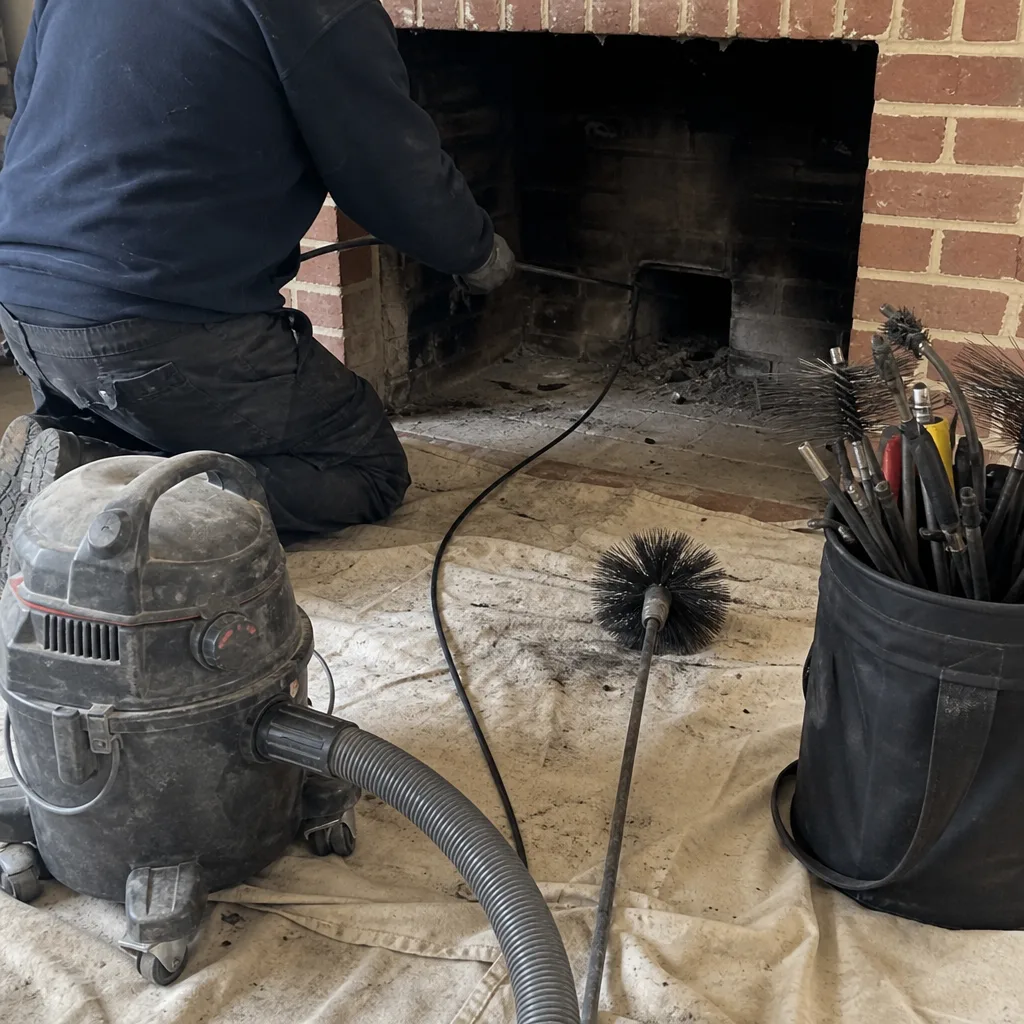 Before
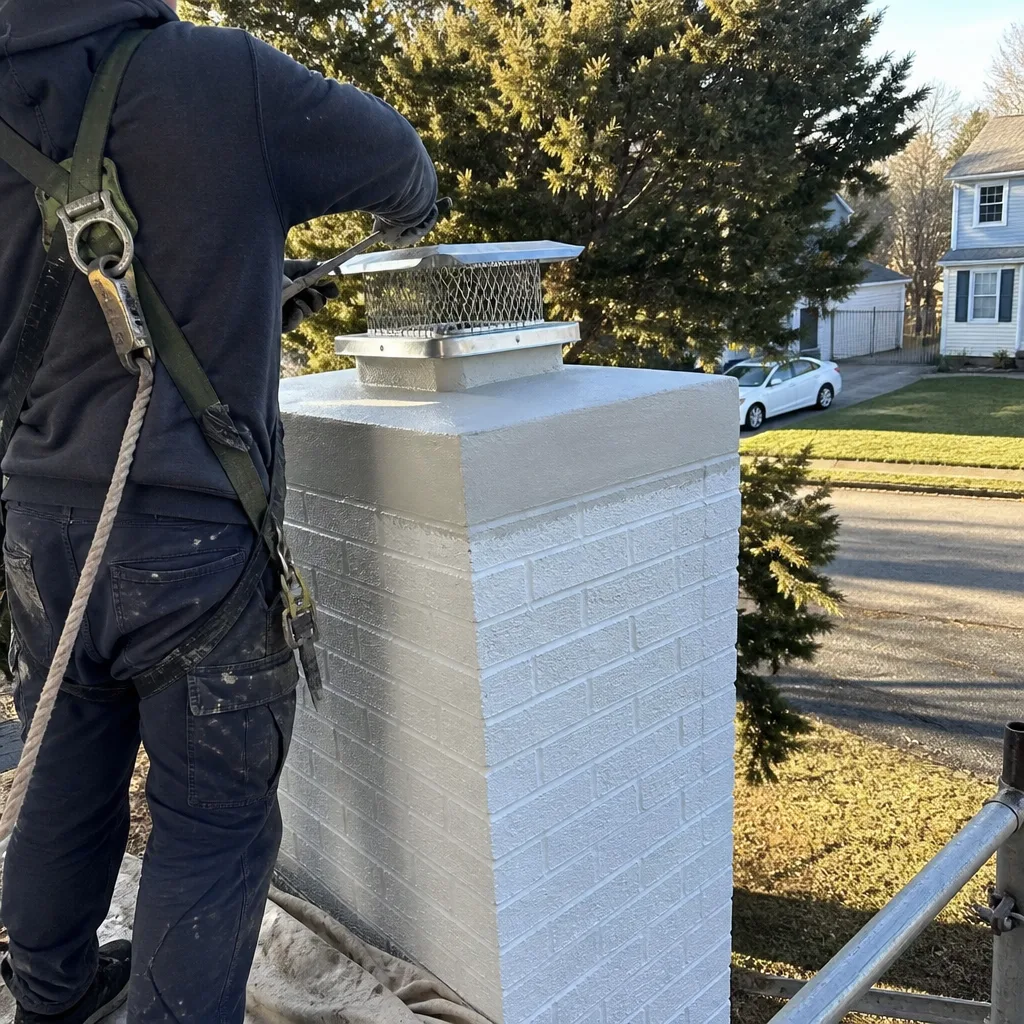 After
AfterDIY vs Professional Chimney Cleaning: The Seaford Homeowner’s Decision Guide
A rotary brush and a drop cloth will remove surface creosote from a straight flue - but they do nothing for glaze-stage creosote, nothing for liner cracks, and nothing for the smoke chamber ledge where the most dangerous accumulation actually lives. In Seaford, where salt air from the South Shore accelerates masonry deterioration and many homes built in the 1960s and 70s still run original terracotta liners, knowing which side of that line your chimney sits on isn’t about being handy. It’s about knowing what you can’t see from the firebox. This guide walks you through exactly what a competent DIY cleaning accomplishes, what professional equipment reveals that no consumer brush kit can touch, and how to tell which category your chimney belongs in before you spend a dollar either way. For year-round seasonal care specific to Seaford conditions, see our dedicated homeowner’s guide.
Quick Answer
DIY chimney cleaning is adequate for straight, lined flues with light, powdery (first-degree) creosote and no known damage history - typically found in newer gas inserts or wood stoves used sparingly. For Seaford homes with older masonry, glazed creosote, unlined flues, or any previous chimney fire, professional cleaning with video inspection is the only safe path. The equipment gap - rotary power brushing, video scoping, and smoke chamber tools - determines whether you’re removing debris or hiding a hazard.
Table of Contents
- What DIY Chimney Cleaning Can Actually Accomplish
- The Equipment Gap: What Professionals Bring That You Can’t Buy at Home Depot
- Three Chimney Conditions That Make DIY Actively Dangerous
- The True Cost Comparison: Time, Materials, and Hidden Expenses
- How to Do a DIY Inspection Walk-Around Before Calling a Pro
- Seaford-Specific Factors: Climate, Codes, and Common Local Conditions
- Common Mistakes to Avoid
- When to Call a Professional
- Frequently Asked Questions
- The Bottom Line
What DIY Chimney Cleaning Can Actually Accomplish
Let’s start where most guides won’t: with respect for the homeowner who wants to handle routine maintenance themselves. A DIY cleaning isn’t foolish by definition. It’s foolish when it’s applied to the wrong chimney.
A competent DIY cleaning with a quality brush kit - poly or wire bristles sized to your flue diameter, extension rods, a drop cloth, and a shop vacuum with HEPA filtration - can accomplish the following in the right conditions:
- Remove first-degree creosote: the light, sooty, powdery buildup that forms from dry hardwood burned hot and complete
- Clear minor debris: bird nests in the cap (if safely accessible), leaves, and loose masonry fragments
- Restore draft efficiency when blockage is superficial and located in the easily reachable upper flue
- Provide visual confirmation that the flue is straight, unobstructed, and free of obvious structural damage from the firebox view
The right conditions matter. We’re talking about a straight, lined flue - metal or intact terracotta - with no offset, no smoke chamber narrowing, and no history of chimney fire or water intrusion. In Seaford, this profile most often matches:
- Gas fireplace inserts installed after 2000 with direct-vent or B-vent configurations
- Pellet stoves with factory-engineered venting systems maintained annually
- Occasional-use wood fireplaces in newer construction (1990s forward) with stainless steel liners
What DIY cannot do, even in ideal conditions, is verify that the conditions are ideal. You cannot see the full liner surface from the firebox. You cannot assess creosote stage by appearance alone - second-degree (shiny, flaky) and third-degree (glazed, tar-like) creosote look different under direct light than they do in a dim firebox. And you absolutely cannot evaluate the smoke chamber, that critical transition area above the damper where most chimney fires actually begin.
We’ve seen homeowners in Seaford’s Harbor Green and Seaford Harbor sections do perfectly competent surface cleanings on chimneys that were, unbeknownst to them, lined with cracked terracotta from freeze-thaw cycles. The brush went up and down. The soot came out. The hazard remained invisible. That’s the honest limit of DIY: it cleans what it can reach and reveals nothing about what it cannot.
The Equipment Gap: What Professionals Bring That You Can’t Buy at Home Depot
The consumer brush kits available at hardware stores top out around $75-$150. Professional-grade chimney equipment starts where those kits end. The gap isn’t about marketing. It’s about physics and documentation.
Rotary Power Brushing Systems
A professional rotary system - we use equipment compatible with DuraFlex and Olympia Chimney specifications - spins a flexible cable with a whipping action that contacts 360 degrees of flue surface at controlled speed. Consumer rods are pushed and pulled by hand. The difference in creosote removal is comparable to brushing your teeth versus a dental hygienist’s ultrasonic scaler. For glazed (third-degree) creosote, rotary action is the only non-chemical removal method that works without damaging the liner.
Video Camera Scoping
This is where the liability calculus changes. A professional chimney cleaning and sweep in Seaford includes a Level-2 inspection with video documentation. The camera - a self-leveling, high-resolution unit on a flexible rod - travels the full flue length, recording every joint, every crack, every spalled tile, every gap in a mortar joint. You see what we see. We provide photos and a plain-English verdict: what’s urgent, what’s monitorable, what’s cosmetic.
No consumer tool replicates this. Borescope cameras sold to homeowners lack the length, lighting, and self-leveling capability for chimney work. More importantly, interpreting what the image shows requires seeing thousands of flues across varying conditions - the kind of pattern recognition that comes from decades in the trade.
Smoke Chamber Tools and Access
The smoke chamber is the inverted funnel above your damper, where hot gases collect before entering the flue. Building codes (IRC R1001.8) require it to be parge-coated smooth, but many older Seaford homes - particularly in the original 1950s developments near Washington Avenue - have rough, corbeled brick smoke chambers that collect creosote in ledges and corners. Professional smoke chamber tools - specialized scrapers, whips, and vacuum attachments - reach these areas. Consumer brush kits stop at the damper.
HEPA Containment and Disposal
Creosote is a listed hazardous waste in New York State when removed in quantity. Professional vacuums with true HEPA filtration and proper containment prevent airborne particulate from circulating through your HVAC system. We’ve been called to homes where DIY cleanings left soot in ductwork for months.
Professional-Grade Materials for Repairs Found During Cleaning
When inspection reveals damage, professional repair requires professional materials. We specify HeatShield for smoke chamber resurfacing, Gelco and Famco for cap and damper replacements, and DuraFlex and Olympia Chimney liner systems when relining is necessary. These aren’t retail products. They’re specified by engineers, tested to UL standards, and installed with manufacturer training. A DIY cleaning that discovers damage leaves you with a problem and no path to fix it correctly.
Three Chimney Conditions That Make DIY Actively Dangerous
There are chimneys where DIY cleaning is merely inadequate, and there are chimneys where it’s dangerous. These three conditions cross that line.
1. Third-Degree (Glazed) Creosote
Glazed creosote forms when wood is burned slowly, when the flue is oversized for the appliance, or when the wood is unseasoned. It looks like black tar, feels like enamel, and ignites at approximately 451°F - roughly the ignition temperature of paper. Once ignited, it burns at temperatures exceeding 2,000°F, far beyond what standard masonry can withstand.
Attempting to brush glazed creosote with consumer tools risks:
- Ignition from friction or static electricity in a confined, oxygen-limited space
- Partial removal that leaves a thinner, more volatile layer with increased surface-area-to-mass ratio
- Physical damage to terracotta liners from aggressive brushing without rotary control
Professional removal of glazed creosote uses controlled rotary action, chemical pretreatment when necessary, and thermal monitoring. We don’t guess at the stage. The camera shows us, and we document it.
2. Unlined or Partially Lined Flues
An unlined masonry chimney - common in Seaford homes built before 1940 and in some 1950s-60s construction where original clay liners have collapsed - exposes combustible framing to direct heat and allows creosote to soak into mortar joints. A brush in an unlined flue can dislodge mortar, create new gaps, or worse, provide false confidence that the chimney is “clean” when the real problem is that it has no protective barrier between fire and structure.
We’ve documented unlined flues in Seaford’s older neighborhoods near Jackson Avenue and Sunrise Highway where homeowners had brushed annually for years, never knowing their chimney had no liner. The brushing removed surface soot. The structure remained unprotected. Only video inspection revealed the truth.
3. Previous Liner Damage or Chimney Fire History
If your chimney has ever had a fire - even a small one you extinguished yourself - the liner has been thermally stressed. Terracotta tiles crack. Stainless steel liners warp or develop micro-fractures. The damage may be invisible from the firebox and undetectable by brush resistance.
Cleaning a damaged liner without inspection can:
- Mask the damage by removing soot that was actually indicating heat-pattern anomalies
- Cause further structural compromise through mechanical stress on weakened materials
- Delay necessary relining, allowing continued heat transfer to surrounding structure
In Seaford’s climate, where nor’easters drive moisture into masonry and freeze-thaw cycles expand existing cracks, previous damage accelerates rapidly. A cleaning that doesn’t inspect is a cleaning that enables deterioration.
The True Cost Comparison: Time, Materials, and Hidden Expenses
The honest accounting of DIY versus professional cleaning includes factors most cost guides omit. For a detailed Chimney Cleaning Cost Breakdown: The Seaford Homeowner’s Reference for 2026, see our dedicated pricing guide. Here’s the full ledger for a typical Seaford homeowner.
DIY Costs (First-Year, Straight Flue Scenario)
| Item | Cost Range |
|---|---|
| Quality brush kit with rods (sized to 8″ x 8″ or 6″ round flue) | $65 - $140 |
| Drop cloths, tarps, painter’s plastic | $20 - $40 |
| HEPA shop vacuum or rental | $80 - $200 (purchase) or $35/day (rental) |
| Safety equipment: respirator, goggles, gloves | $30 - $60 |
| Ladder or roof access equipment (if cleaning from top) | $0 (owned) - $150 |
| Creosote disposal (Nassau County hazardous waste drop-off) | $0 - $25 |
| First-year total | $195 - $615 |
| Amortized annual cost (kit lasts 5-7 years with light use) | $35 - $90/year |
Professional Cleaning with Level-2 Inspection in Seaford
| Item | Cost Range |
|---|---|
| Standard sweep with Level-2 video inspection | $225 - $350 |
| Glazed creosote removal (if needed) | $150 - $300 additional |
| Smoke chamber cleaning | $75 - $150 additional |
| Written condition report with photos | Included |
| 90-day warranty on work | Included |
The raw numbers suggest DIY saves money only after multiple years of use, and only if nothing goes wrong. But the hidden costs reshape the equation:
- Time: A proper DIY cleaning - setup, brushing, vacuuming, cleanup, equipment maintenance - takes 3-5 hours for a first-timer. Professional cleaning with inspection takes 60-90 minutes of your time, start to finish.
- Mess: Creosote dust penetrates upholstery, carpets, and HVAC returns. We’ve cleaned soot from DIY jobs that cost more in professional restoration than five years of our sweeps would have.
- Incomplete removal: Partially cleaned glazed creosote is more dangerous than untouched buildup. It burns faster and hotter.
- Missed damage: The cost of undetected liner damage is not a cleaning cost. It’s a house fire, or a $4,000-$12,000 relining job discovered during a home sale inspection, when you have no negotiating leverage.
For Seaford homeowners who use their fireplace as primary heat - common in the winter months when South Shore wind cuts through older windows - the professional route pays for itself in safety margin alone. For occasional decorative fires in a well-maintained, modern system, DIY is a defensible choice if you’re honest about the limitations.
How to Do a DIY Inspection Walk-Around Before Calling a Pro
The best homeowner is an informed client, not a passive one. Even if you intend to hire a professional - which we recommend for most Seaford chimneys - conducting your own preliminary inspection makes you a better consumer of the service. You’ll know what questions to ask, what the technician should find, and whether the verdict you receive matches what you observed.
Step 1: Exterior Ground-Level Assessment
Walk the perimeter of your home with binoculars or a zoom camera. You’re looking for:
- Missing or damaged chimney cap - gaps allow water, animals, and debris
- Crown cracks - the concrete slab topping the chimney; hairline cracks are early warnings, wide cracks or spalling indicate water intrusion
- Flashing separation - the metal where chimney meets roof; lifted or rusted flashing channels water into attic spaces
- Brick or block deterioration - spalling (flaking surface), missing mortar joints, or efflorescence (white mineral deposits indicating moisture migration)
In Seaford, pay particular attention to the side of your chimney facing southwest. Prevailing winter storms and salt-laden air from the Atlantic accelerate deterioration on that exposure. We’ve replaced more crowns and caps on southwest faces in Seaford than any other orientation.
Step 2: Attic Inspection (If Accessible)
With the fireplace cold and a flashlight, examine the chimney where it passes through your attic. Look for:
- Discoloration of framing members - any darkening indicates heat transfer or past leakage
- Visible gaps between chimney masonry and framing - code requires clearance, but gaps larger than specified may indicate settling or structural movement
- Metal liner or insulation wrap - if present, note condition; if absent in a newer installation, question why
Step 3: Firebox and Damper Examination
Open the damper fully. Shine a flashlight up the flue. You’re assessing:
- Damper operation - does it open fully, close completely, and seal reasonably?
- Visible flue condition - straight or offset? Liner visible? Any obvious cracks, gaps, or obstructions?
- Creosote appearance - powdery and light (first-degree), flaky and shiny (second-degree), or tar-like and glazed (third-degree)?
- Smoke chamber - can you see the walls above the damper? Are they smooth or rough brick?
Step 4: Document and Compare
Photograph everything. When the professional arrives, share your observations. A quality technician will welcome informed engagement and should confirm or explain discrepancies. If your exterior inspection revealed crown cracks and the technician doesn’t mention them, ask why. If you saw glazed creosote and the estimate doesn’t include rotary treatment, question the scope.
This preparation transforms you from a price-shopper into a value-evaluator. You’ll recognize whether the chimney repair in Seaford being recommended matches the conditions you documented, or whether you’re being sold unnecessary work.
Seaford-Specific Factors: Climate, Codes, and Common Local Conditions
Chimney maintenance isn’t generic. The South Shore of Long Island presents specific conditions that shape what’s likely wrong, what’s legally required, and what your neighbors are dealing with.
Salt Air and Accelerated Masonry Deterioration
Seaford sits roughly 3 miles from the Atlantic at its closest point. Salt aerosols carried on prevailing southwest winds penetrate masonry capillaries, accelerate steel corrosion, and degrade metal components faster than inland locations. We’ve replaced Gelco caps in Seaford at 8-10 year intervals that last 15+ years in Syosset or Plainview. This isn’t a product failure. It’s environmental loading. Your maintenance schedule should reflect it.
Freeze-Thaw Cycling
Nassau County averages 15-20 freeze-thaw cycles annually where temperatures cross 32°F within 24 hours. Each cycle expands water in masonry cracks, progressively widening them. Seaford’s older homes with original terracotta liners - particularly in the Seaford Manor and Seaford Harbor elementary zones - show accelerated spalling compared to similar construction in more sheltered microclimates. A liner that might last 50 years inland can require attention at 35-40 years here.
Nassau County Fire Code and Insurance Requirements
New York State Uniform Fire Prevention and Building Code (19 NYCRR Part 1221) adopts the International Residential Code with state amendments. For Seaford homeowners, the practical implications include:
- Wood-burning appliances require annual inspection; insurance claims after chimney fires may be denied without documentation of compliance
- Level-2 inspection (video) is required upon property sale or transfer - not optional, and not satisfied by a basic sweep receipt
- Unlined chimneys cannot be used for solid-fuel appliances without approved liner installation
Your insurance carrier may have additional requirements. We’ve worked with Seaford homeowners whose carriers now specifically request video documentation of liner condition before policy renewal. DIY cleaning provides no such documentation.
Common Seaford Chimney Profiles
From our work across Seaford’s neighborhoods, three profiles dominate:
- 1950s-60s ranch or cape, original terracotta liner, wood-burning fireplace: High probability of liner degradation, often with unlined smoke chamber. Professional inspection essential; DIY cleaning inadequate and potentially misleading.
- 1970s-80s colonial, factory-built metal chimney, wood stove: Often better maintained, but metal fatigue at joints common after 30+ years. DIY cleaning possible if liner is accessible and condition is known good; video inspection still warranted every 3-5 years.
- 1990s-2000s construction, gas insert with direct vent: Lowest maintenance burden. DIY cleaning of terminal and visible venting reasonable; annual professional inspection recommended but cleaning may be biennial if usage is light.
Knowing your home’s construction era and original chimney type - information available from Nassau County property records if you don’t have your original build documents - helps you self-select into the right maintenance category.
Common Mistakes to Avoid
- Assuming a clean-looking firebox means a clean flue. The firebox is where you see; the flue is where the problem lives. We’ve found chimneys with pristine fireboxes and dangerously obstructed flues from collapsed liner segments.
- Using the wrong brush material for the liner type. Wire brushes on stainless steel liners cause scoring that accelerates corrosion. Poly brushes on heavy glazed creosote are ineffective. Match the tool to the job, or hire someone who carries all options.
- Cleaning from the top down without proper roof safety. Seaford’s split-level and colonial roofs have pitches that become treacherous with November dew or December frost. Falls from single-story roofs cause serious injury. If you can’t work from the firebox with adequate rod length, don’t go up.
- Ignoring the smoke chamber. This is where most chimney fires start, and no consumer brush kit reaches it effectively. A clean flue with a packed smoke chamber is a hazard dressed as maintenance.
- Disposing of creosote in household trash. Nassau County classifies creosote as hazardous waste in quantities over residential de minimis levels. Improper disposal exposes you to fines and creates fire risk in collection vehicles. The county’s S.T.O.P. program accepts it; professional services handle disposal as part of the service.
- Continuing to use a chimney after a suspected fire without inspection. Even a small, self-extinguished chimney fire can crack liners or damage mortar. The chimney may draft normally afterward, masking structural compromise. Always inspect after any fire event.
- Equating “I didn’t find problems” with “there are no problems.” Absence of evidence is not evidence of absence when your inspection tools are limited to a flashlight and a brush. The most expensive words in home maintenance are “it looks fine to me.”
When to Call a Professional
Call a professional when any of the following apply: your chimney is unlined or you don’t know its liner status; you’ve ever had a chimney fire or significant flue gas backup into the room; you burn more than two cords of wood annually; your chimney serves a wood stove or insert installed before 2010; you observe glazed creosote, damaged masonry, or water staining; you’re preparing to sell your home; or you simply want documentation that protects your insurance coverage and property value.
Hearthstone Chimney Co. offers free estimates in Seaford. We’ll show you what your camera can’t, explain what your brush missed, and give you a plain-English verdict with photos you can see. No pressure, no phantom problems, no surprises on the bill. Call (516) 614-4632 to schedule. A live person answers, 24 hours a day.
Frequently Asked Questions
A standard chimney sweep with Level-2 video inspection in Seaford typically runs $225-$350. Glazed creosote removal adds $150-$300, and smoke chamber cleaning adds $75-$150. Hearthstone’s $89 Seasonal Tune-Up covers basic inspection and light cleaning for qualifying gas fireplaces. Call (516) 614-4632 for an exact quote - estimates are free.
Previous success doesn’t guarantee current safety. Chimneys deteriorate, creosote stages change with wood quality and burning habits, and liner condition evolves. If your previous cleanings were on a known-good system with light use, your competence is real but your information may be stale. Reassess annually, and add professional video inspection at least every third year even if DIY cleaning continues.
The National Fire Protection Association standard is annually for all solid-fuel systems. In Seaford’s salt-air environment, we recommend annual inspection for all chimney types, with cleaning frequency determined by usage: wood-burning fireplaces and stoves, annually or per cord burned (typically every 1-2 cords); pellet stoves, annually; gas fireplaces, every 2-3 years with annual inspection; and oil flues, annually due to corrosive sulfur deposits.
Skipped maintenance leads to creosote accumulation, which restricts draft and increases fire risk. In Seaford’s climate, moisture intrusion compounds the problem, accelerating liner and masonry damage. The progression is predictable: reduced efficiency, then smoke backup, then chimney fire or carbon monoxide hazard. Insurance claims for fire damage may be denied without maintenance documentation. The cost of prevention is a fraction of the cost of remediation.
You shouldn’t accept a liner recommendation without seeing video evidence. At Hearthstone, we document every crack, gap, or spalled tile with photos you can examine yourself. We also tell you plainly when damage is monitorable versus urgent. Our Free Second Opinion offer exists precisely for homeowners who’ve received alarming estimates elsewhere. Bring us the other company’s report; we’ll review it honestly.
A sweep removes combustible deposits. An inspection evaluates structural and functional condition. They’re related but distinct. You can inspect without sweeping (if the flue is clean) but you shouldn’t sweep without inspecting - removing soot can hide damage patterns that the technician should document. Professional service combines both, with the inspection driving the scope of cleaning.
Older neighborhoods with original 1950s-60s construction - Seaford Harbor, Harbor Green, and areas near Washington Avenue - show higher rates of unlined flues and deteriorated terracotta. Homes closer to the waterfront experience accelerated metal component corrosion. Newer construction generally fares better but isn’t immune to installation defects or storm damage. Age and exposure matter more than neighborhood prestige.
The Bottom Line
DIY chimney cleaning has its place: straight, known-good flues with light, powdery creosote, operated by homeowners who understand exactly what they’re not seeing. For most Seaford chimneys - older masonry, salt-air exposure, uncertain histories - professional service with video inspection isn’t an upsell. It’s due diligence. The equipment gap is real, the conditions that make DIY dangerous are common, and the cost of being wrong exceeds the cost of being thorough. Whether you sweep yourself or hire it done, know your chimney’s true condition. Photos don’t lie, and neither do we. Done right - and we stand behind it.
Written by Russell Haines, Owner at Hearthstone Chimney Co., serving Seaford since 2014.